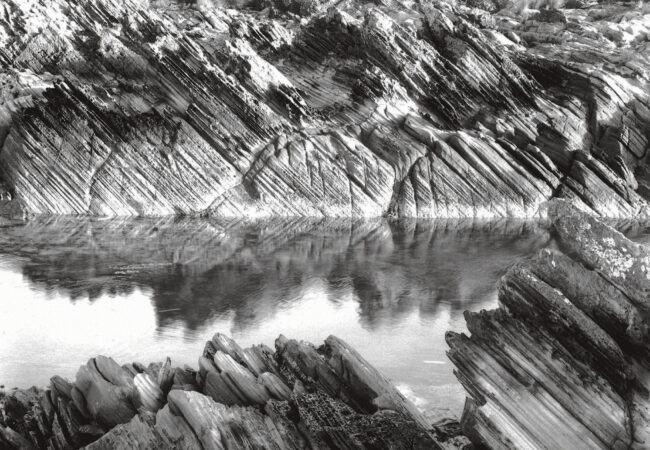
Kiokio fern. Platinum palladium on vellum over silver leaf With…

Folio: Emilio Cresciani
Reconstructed Landscapes
In 2020 Australia was burning. Native forests were destroyed. There were increased calls for back-burning and land-clearing. Deforestation was already a huge public issue.
I started this project, Reconstructed Landscapes, before these deadly fires, continuing my interest in landscapes in transition. I am an artist interested in the intersection between our modern consumer lifestyle and redundancy, waste, transition. My works explore how our landscape is affected by consumerism. Beauty in places of repulsion or neglect. But in this series something different.
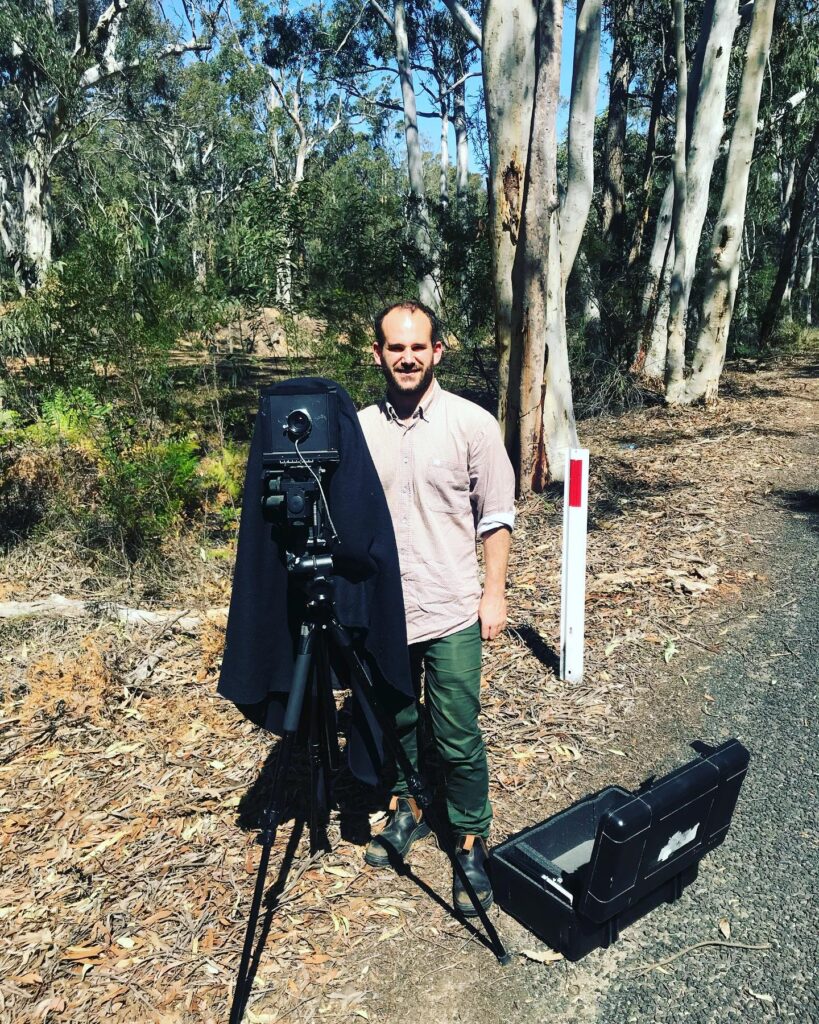
I had taken my Sinar 4×5 camera into our national parks along the east coast, shooting the forests, eco-systems essential to our lives. The majestic specimens and the evocative patterns of their branches, the bark and leaves, the light and shade, offered reminders of their strength and fragility.
I had read that Australia is a deforestation hotspot on the global list of the World Wildlife Fund (WWF). We have cleared nearly half of our forest cover in the last 200 years, resulting in habitat loss, extinction of native flora and fauna, rising salinity and 14% of Australia’s greenhouse gas emissions. (WWF 2020 report Deforestation Fronts)
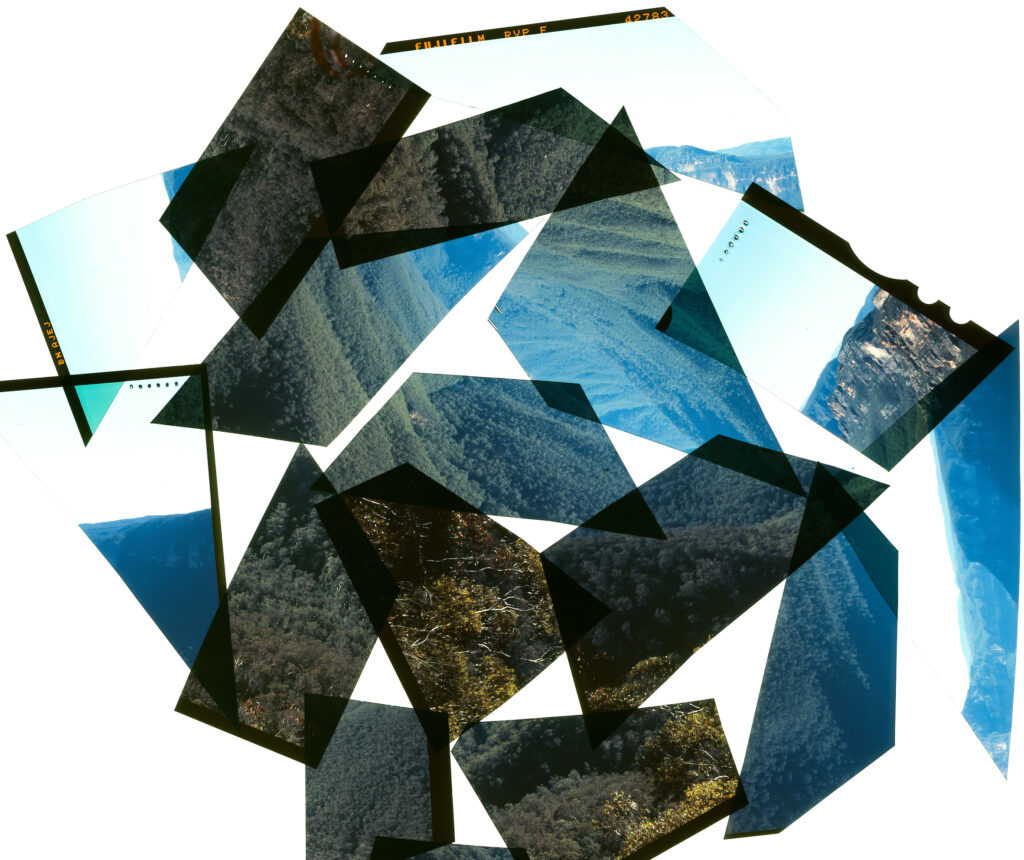
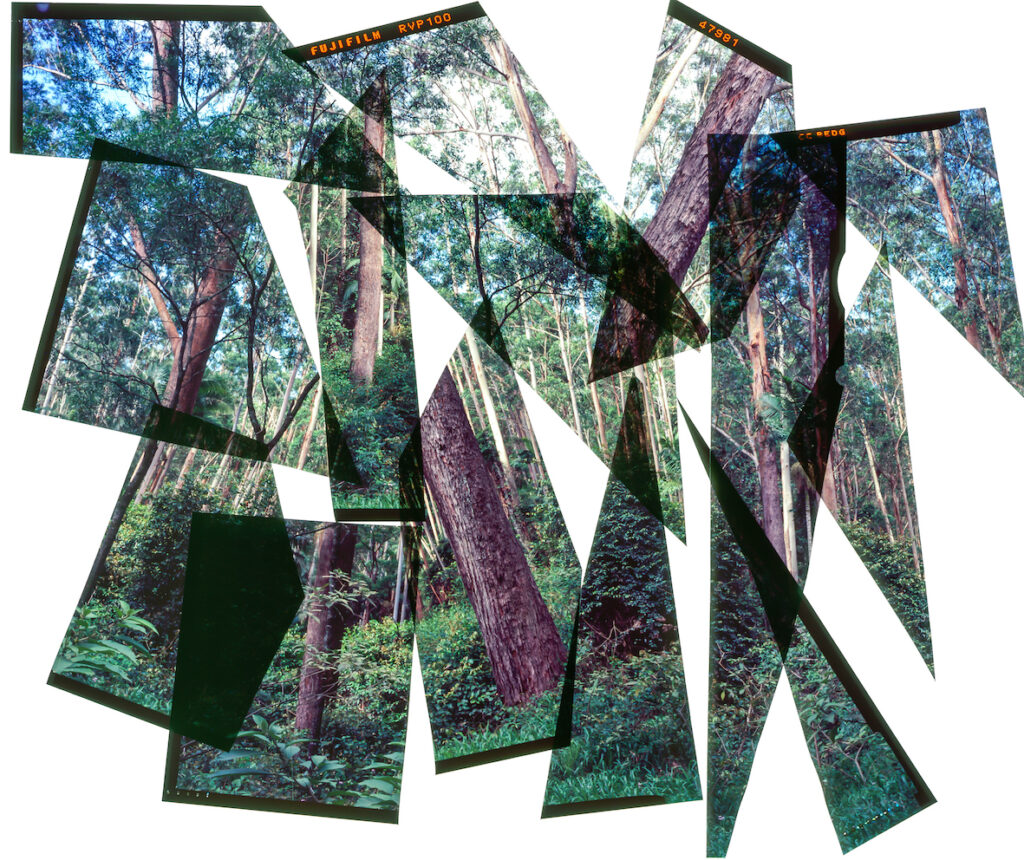
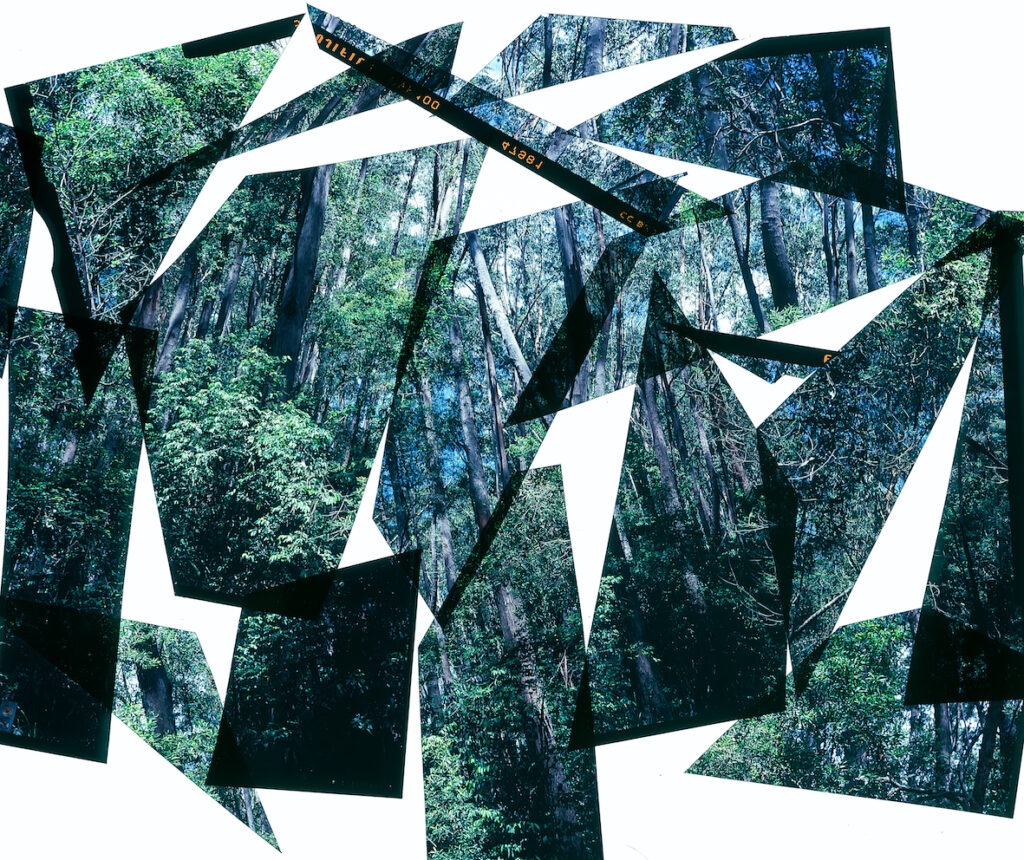
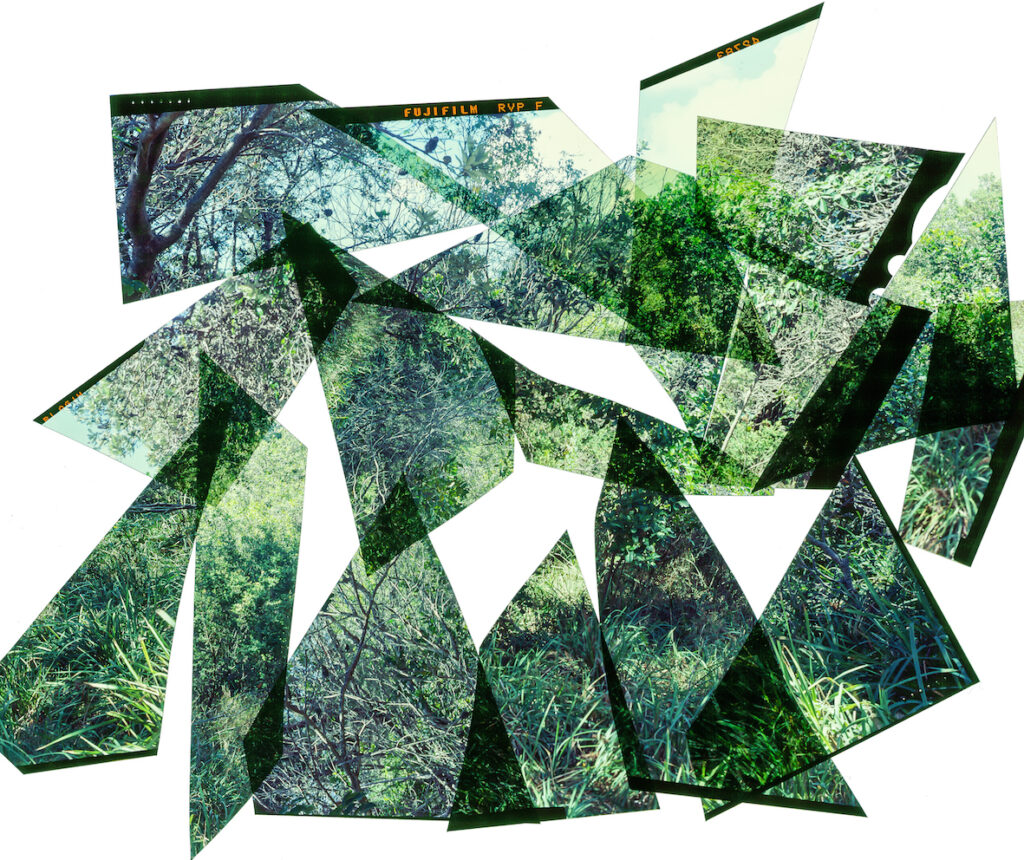
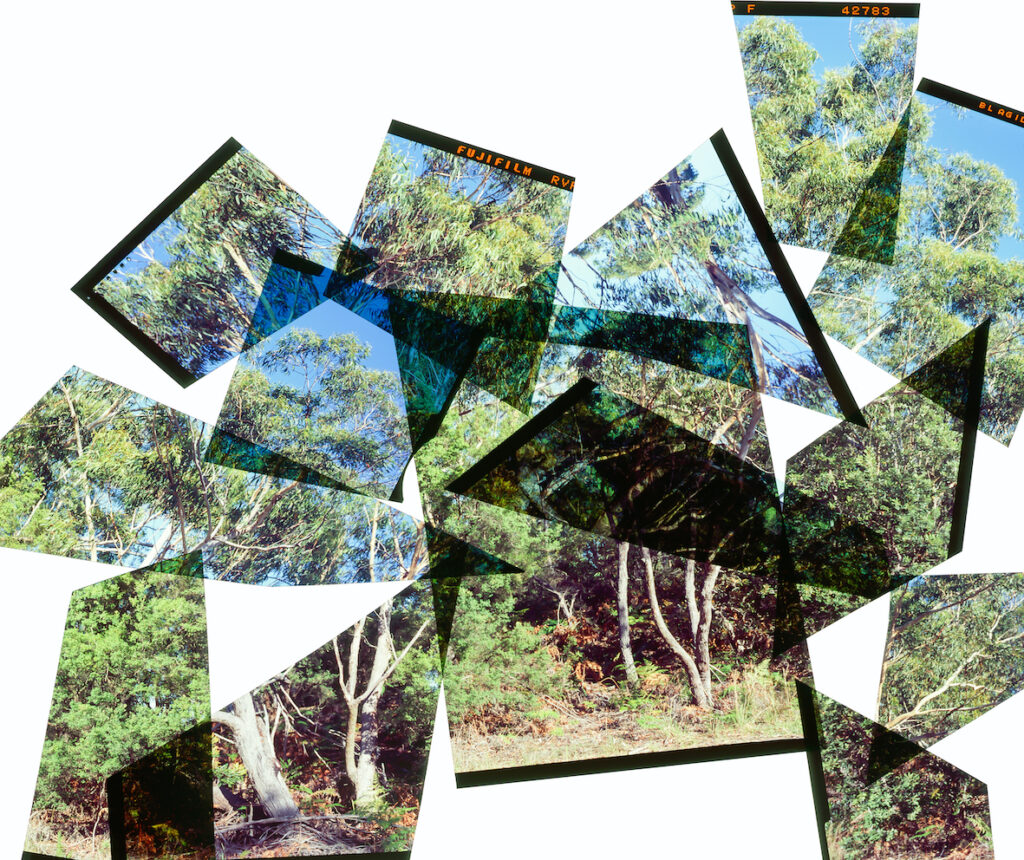
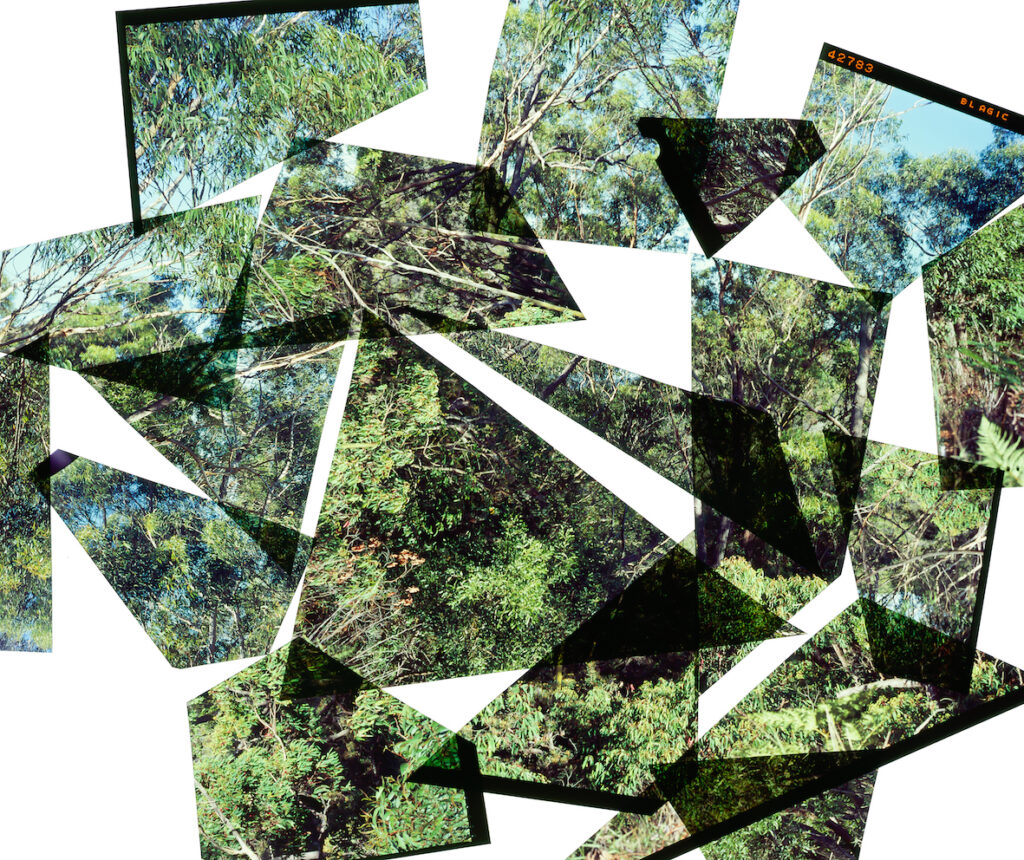
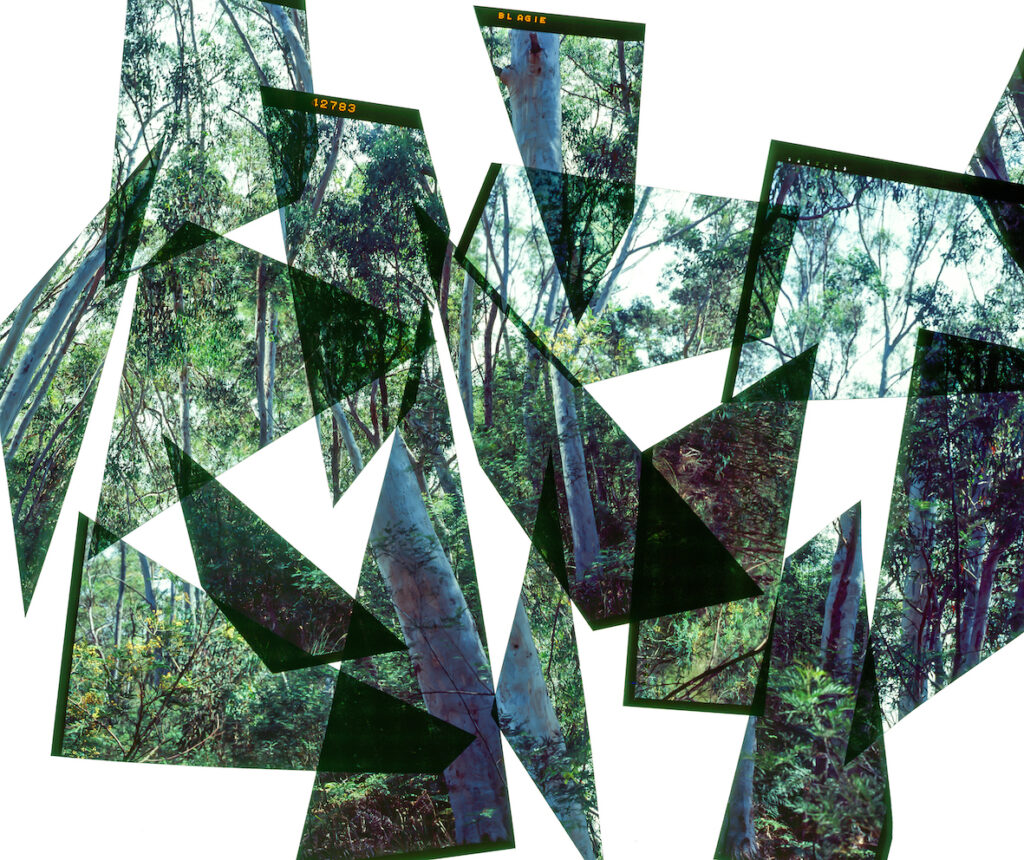
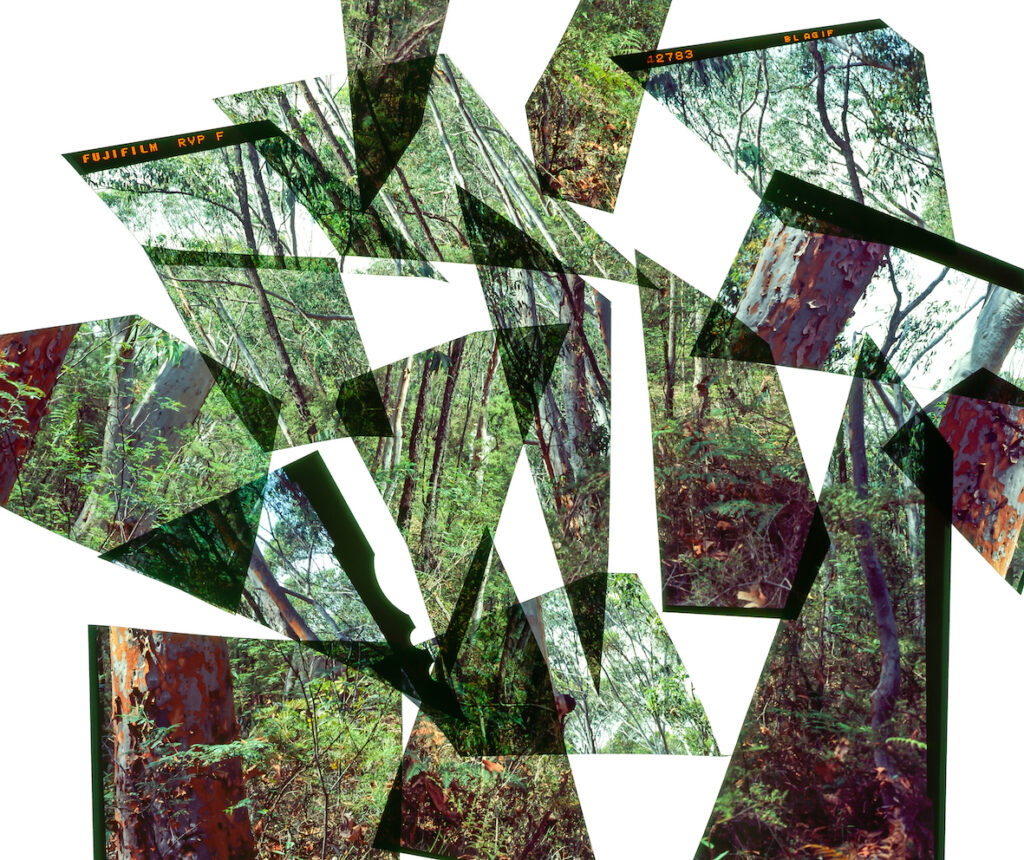
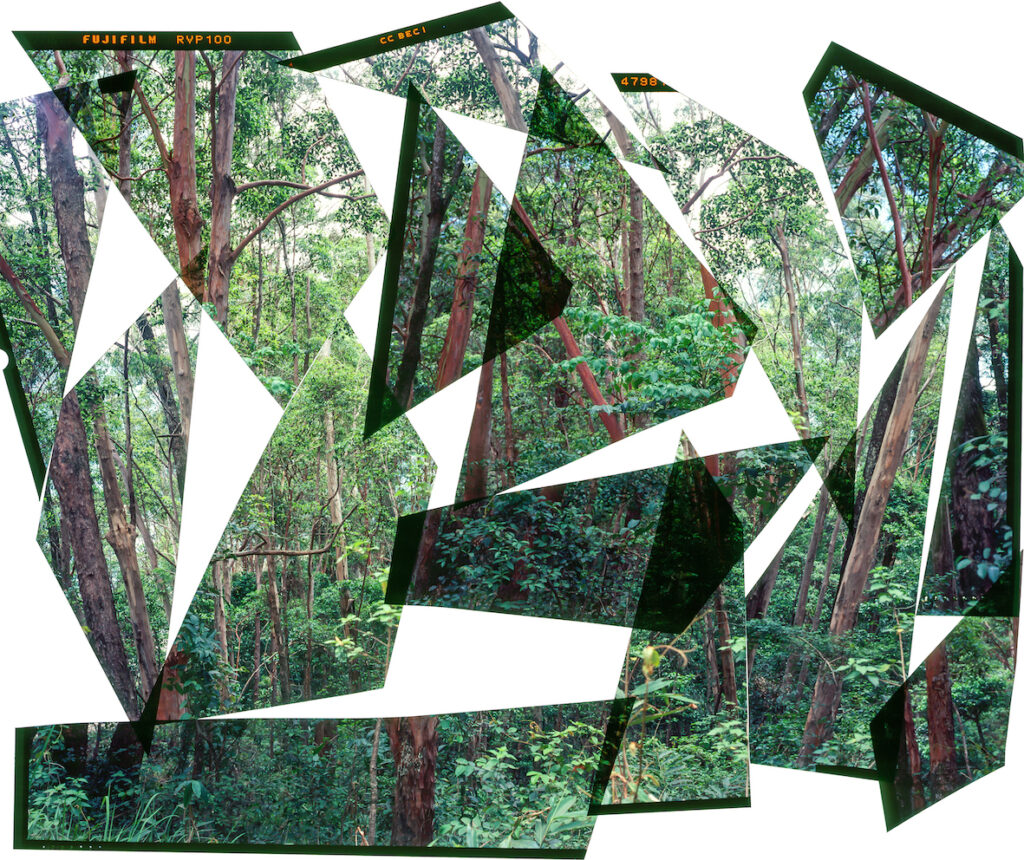
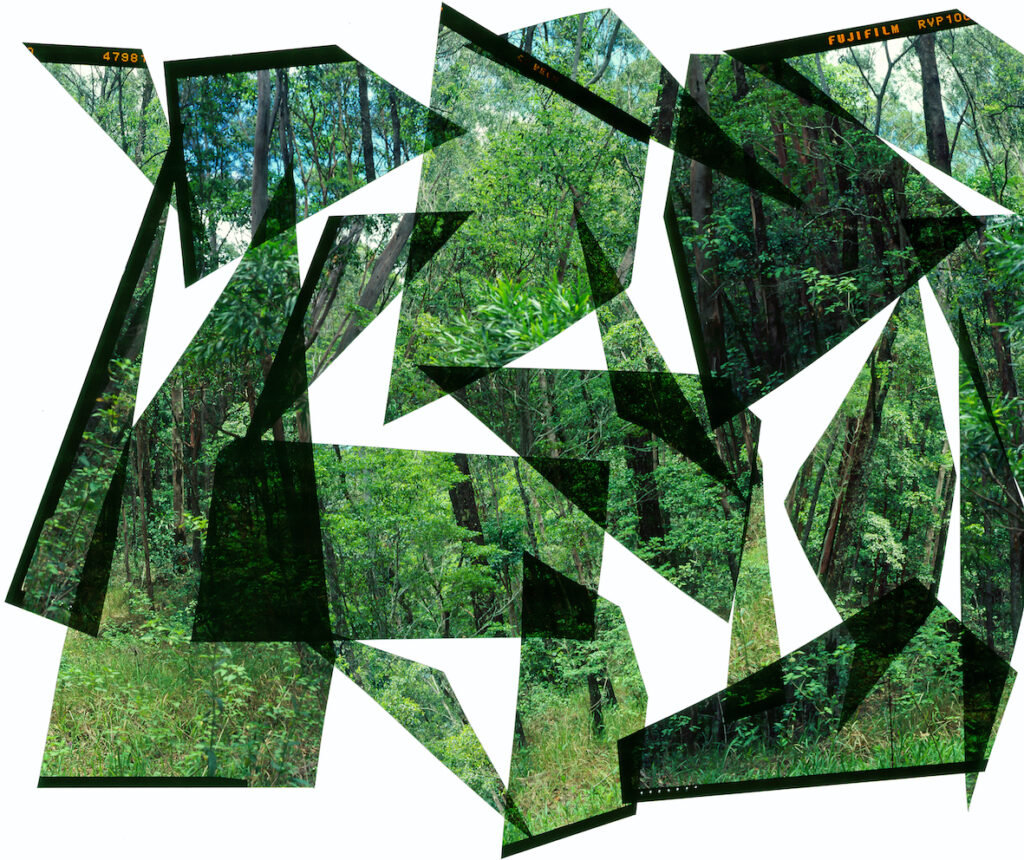
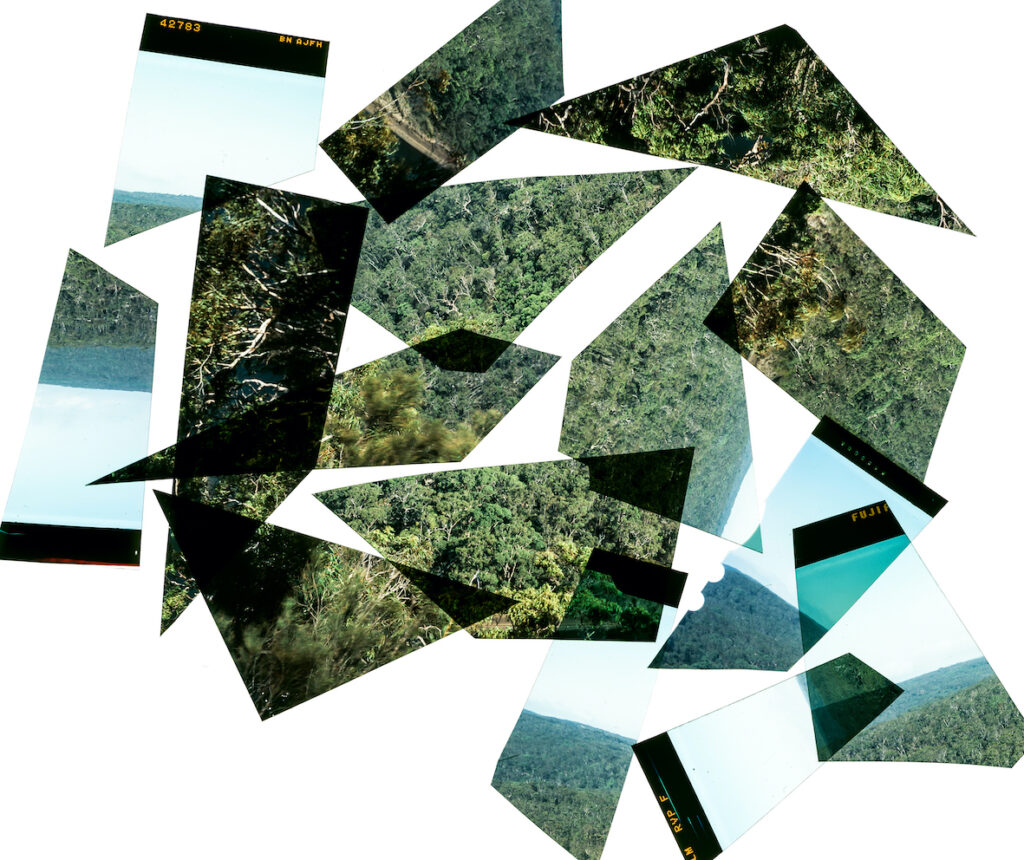
I wondered how to present the concept of the threat to our forests and deforestation. Documentary? Traditional landscapes? I decided to approach the damage to our environment via damage to the film materiality. So I sliced the pieces of positive Fujifilm Velvia slide film into different shapes and sizes, like wood-chips, then rearranged them into bold abstract compositions on a scanner and created digital images. Every piece of the photo was included in the abstract results – including the edges of the emulsion identifying the film type. These strips are part of the image because the film is the artwork.
The billions of trees cut down annually are represented by these photo-chips, a symbol of what we are doing to our natural environment. Cropping an act of vandalism. Sliced so that regeneration is impossible.
I started using a large format camera 10 years ago whilst at university. I was drawn to the process involved – working with upside down images, how you really have to think and compose your image. And importantly the amazing detail you get in the negatives and how much information is in landscapes. It feels like I’m creating a picture, not just taking a shot. I learnt a lot from studying the work of photographers who look into similar themes such as documentary photographer Edward Burtynsky and others who reveal the process in their works. And of course many other artists have used collage with photographs.
I hope the deconstructed trees highlight the gap between the myth of the Australian bush and the real cost of our lifestyles. Sliced and cut, sawn and hacked, these images upset the perception of trees as beautiful, functional, and replaceable. They are out of place, not as they should be.
Main photograph above: Mooball National Park 2021, 50 x 42cm, Inkjet print, Edition 1/3 +AP
Emilio Cresciani
I live and work on Gadigal land (Sydney, Australia) and graduated from Sydney College of the Arts in 2012 in photo media.
My work explores the intersection between our modern consumer lifestyle and redundancy, change, waste and altered landscapes. My interest is in objects, structures, and landscape in transition, and in particular the increasing number of ‘non-places’ that fill our environment. Waste centres, derelict service stations, road works, car parks and abandoned factories.
My art work series have included: Inverted images of rubbish in landfills emphasise the negative side of consumerism, like an x-ray points out disease. Portraits of people with their weekly waste explored the idea that we are defined by what we dump. Cracked car windows and night road works are a metaphor for the central place roads play in capitalism. Works explore how our landscape is affected by consumerism – deforestation, contamination, and oil slicks. Climate change is explored in works where ice melts onto paper in the dark room.
I have been a Finalist in art awards including: Earth Photo Award London, Kuala Lumpur Photo Award, Bowness Photography Prize, Northern Beaches Environment Award, Heysen Prize for Landscape, Du Rietz Award, Mandorla Art Prize, International Monochrome Awards, National Youth Self Portrait Prize, and Semi Finalist Head On Portrait Prize. In 2020 I received a Dark Matter Residency, for darkroom work at PhotoAccess, Canberra.
More of Emilio’s work can be seen on his website and Instagram.
Previous Post: Darkroom – Tony Egan