Folio: Mark Darragh
Fragments – The Wilderness Within
“Sometimes you can tell a large story with a tiny subject.” Eliot Porter
I’ve sometimes referred to myself as a photographer of things other people step on. I say this with tongue only partially in cheek because I’ve had that happen on numerous occasions. My interest in macro photography, details, and close-ups began when I was ten years old and my parents gave me my own 35mm SLR camera. Many of the subjects I photographed were fungi, mosses, lichens, and flowers, particularly native orchids. It was a frustrating exercise; without a true macro lens, I could rarely get as close as I desired. Nonetheless, it was enough to get me interested in nature photography. Forty years later I’m still photographing similar subjects, and the childhood fascination with nature remains.
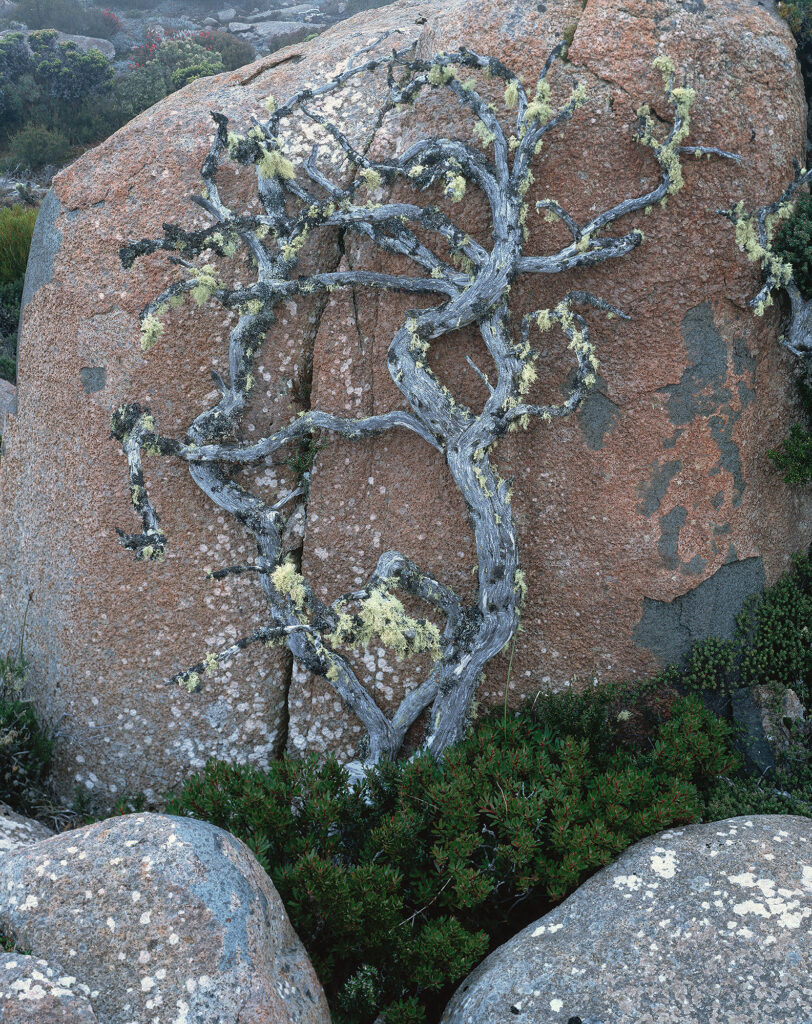
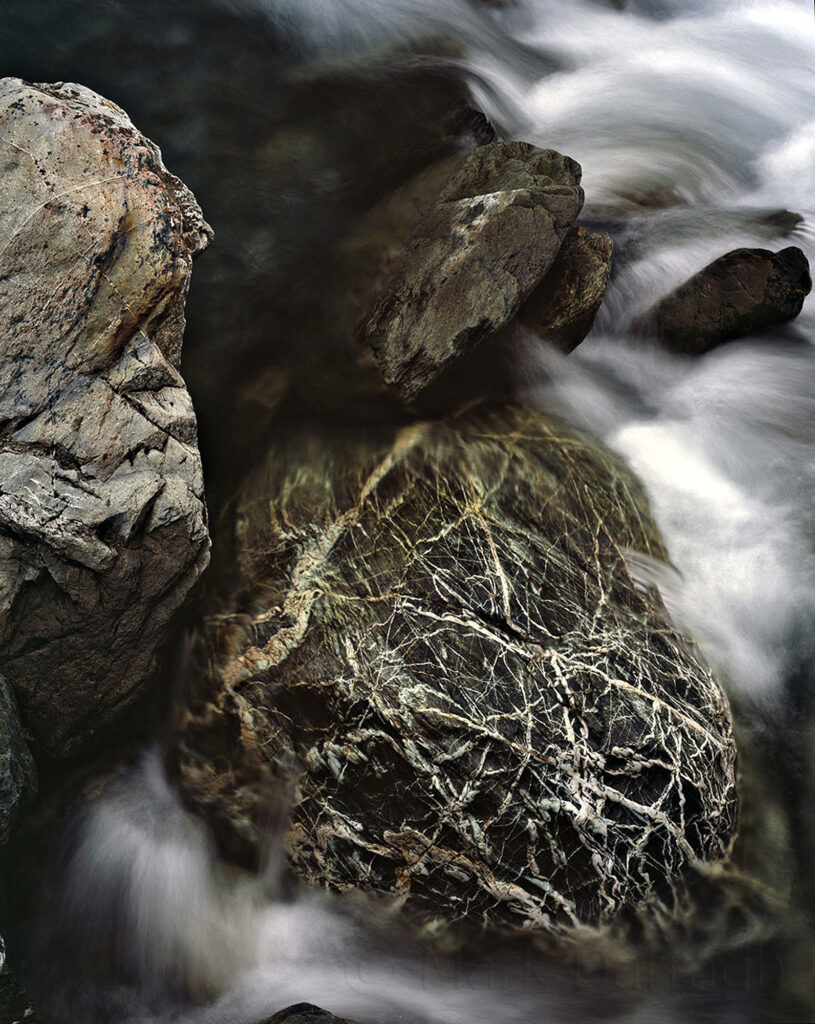
It may seem strange that someone who spends days, sometimes weeks, walking and travelling through remote and wild places makes photographs that on the surface appear to be anonymous. While they can’t immediately be identified with a particular place or notable feature, to say that they are without a sense of place is superficial. These details tell us not about an identifiable geographic feature but rather provide an insight into the landscape itself.
“..I hoped that people would see beyond what they had been conditioned to see, to perceive the subtle and intricate interrelationships that shape the natural world.” Eliot Porter
That phrase, “to perceive the subtle and intricate interrelationships that shape the natural world”, has resonance with me. Some photograph because of their interest in the process of photography, others capture beauty within the landscape, and others advocate for its preservation or any combination of the aforementioned. I photograph for all those reasons but underlying all that is my interest in the ecology and biogeography of a landscape and the processes that create and sustain it.
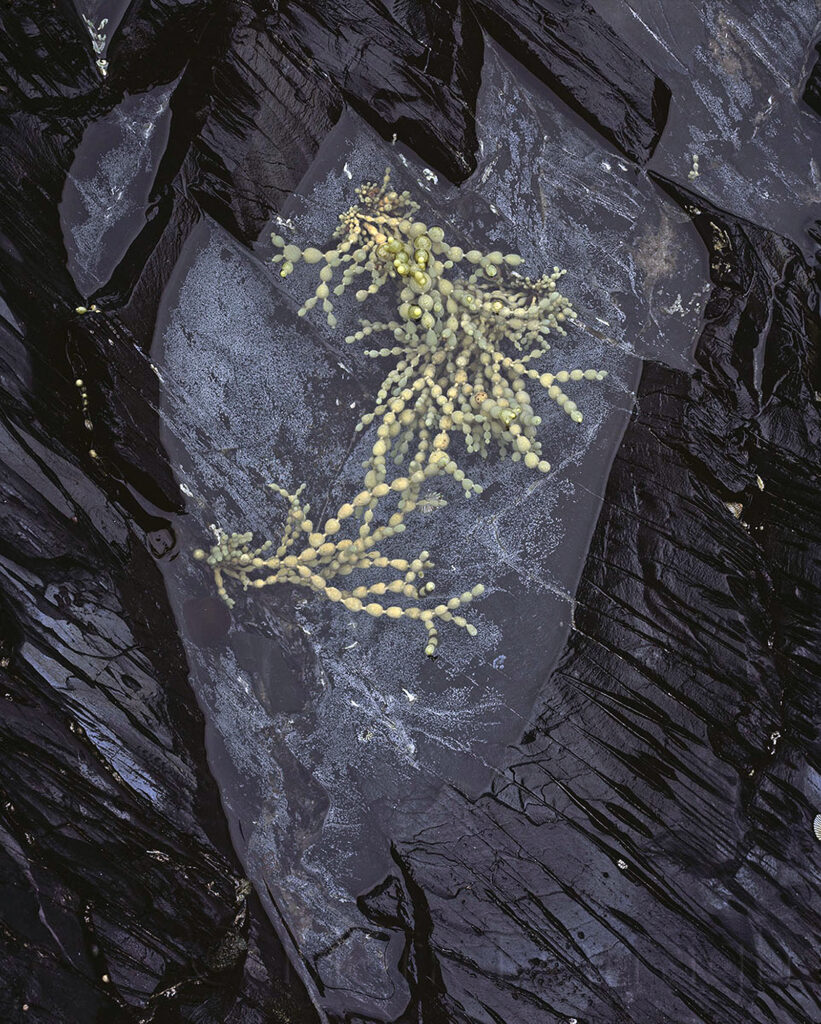
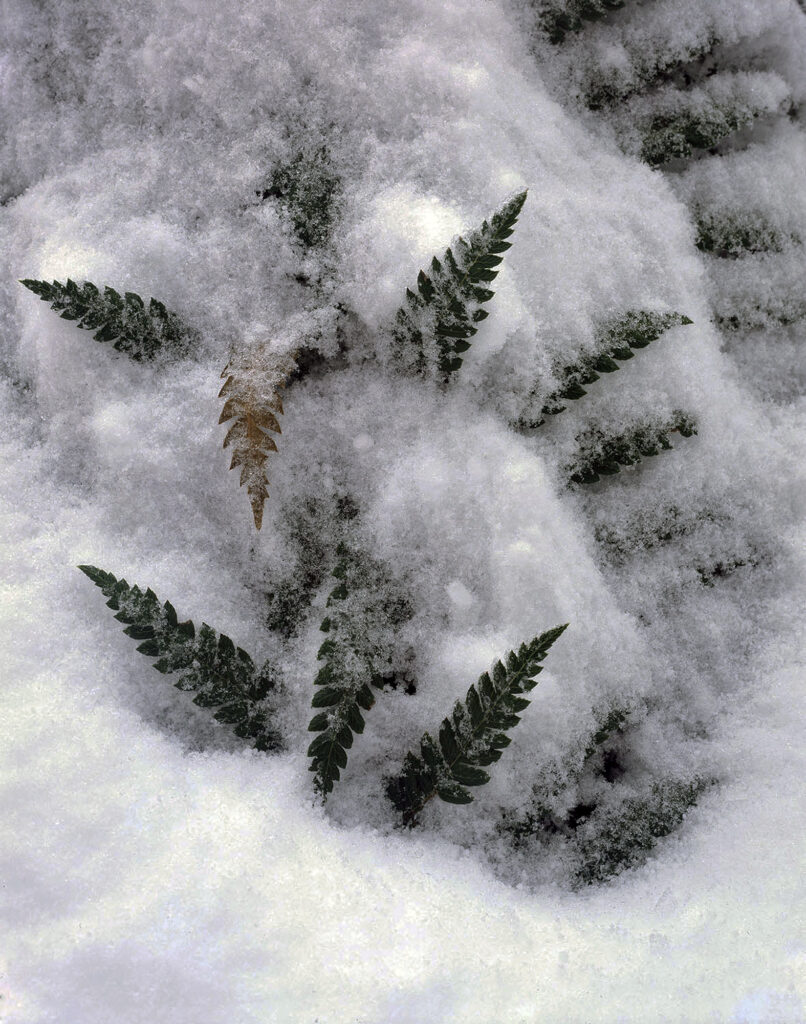
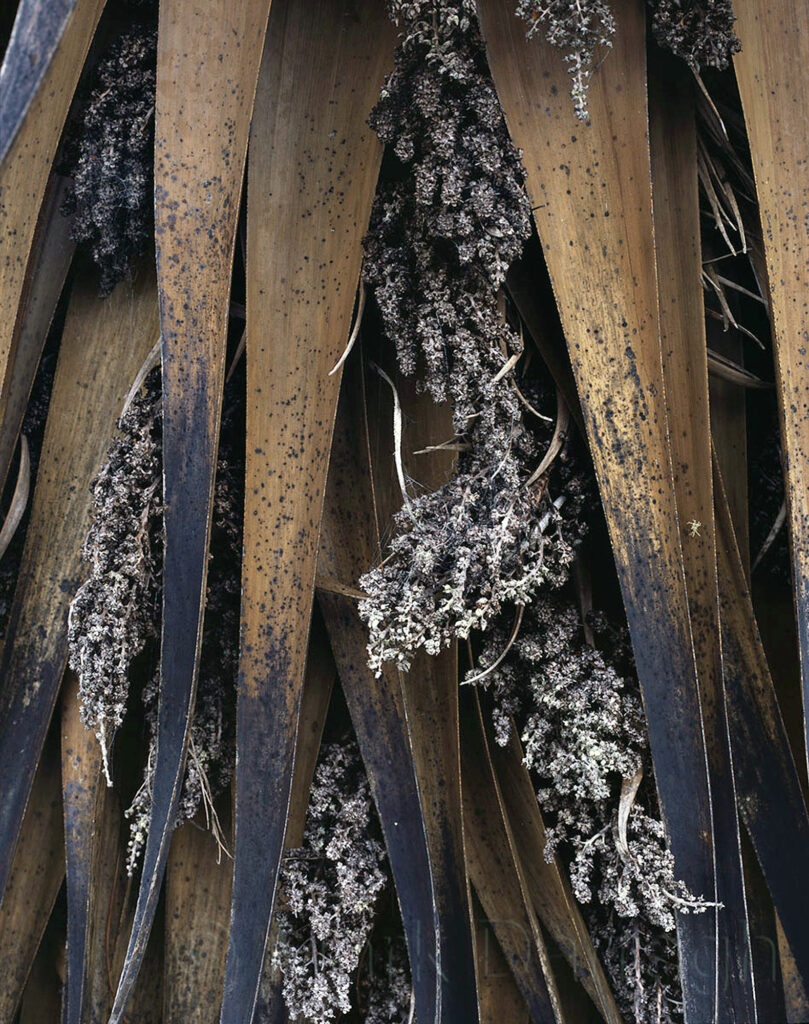
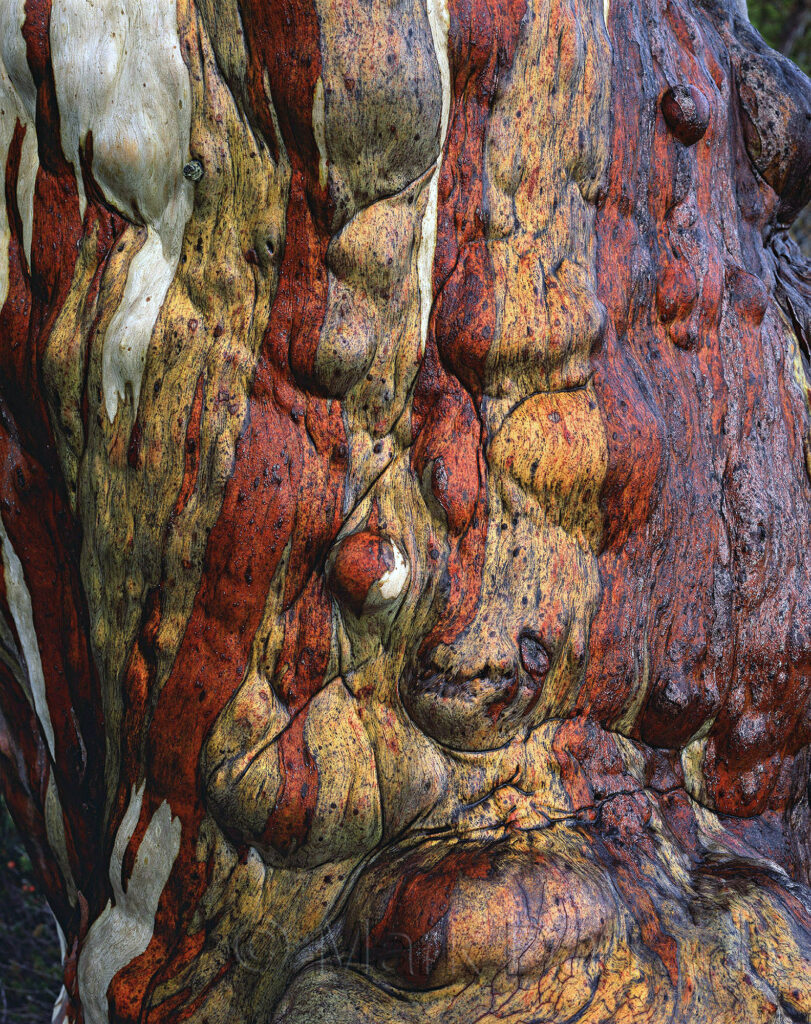
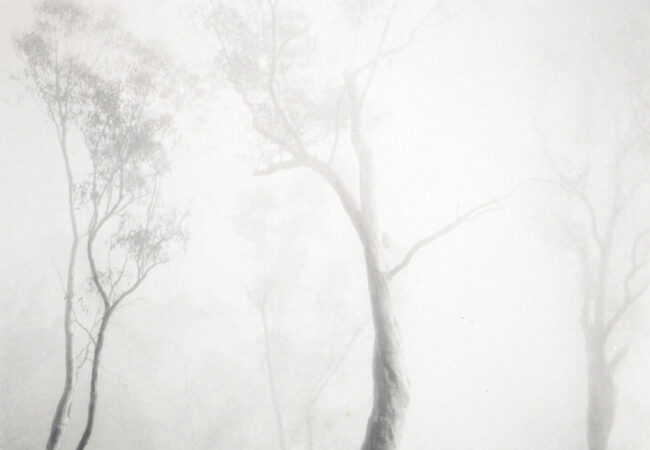
Arguably, photographing details or fragments of the landscape captures the dynamism and passage of time within a landscape. They highlight the ecological cycles and relationships within a landscape far better than the concept of the grand view or vista that many would see as a “typical” landscape photograph. Fungi and flowers may appear quickly and wither within a few days; leaves fall to the forest floor and begin to break down; in the intertidal zone, there is the movement of sand, algae, and animals, changing from tide to tide, even wave to wave. All these details are present but, in a sense, lost within the whole of the wider landscape.
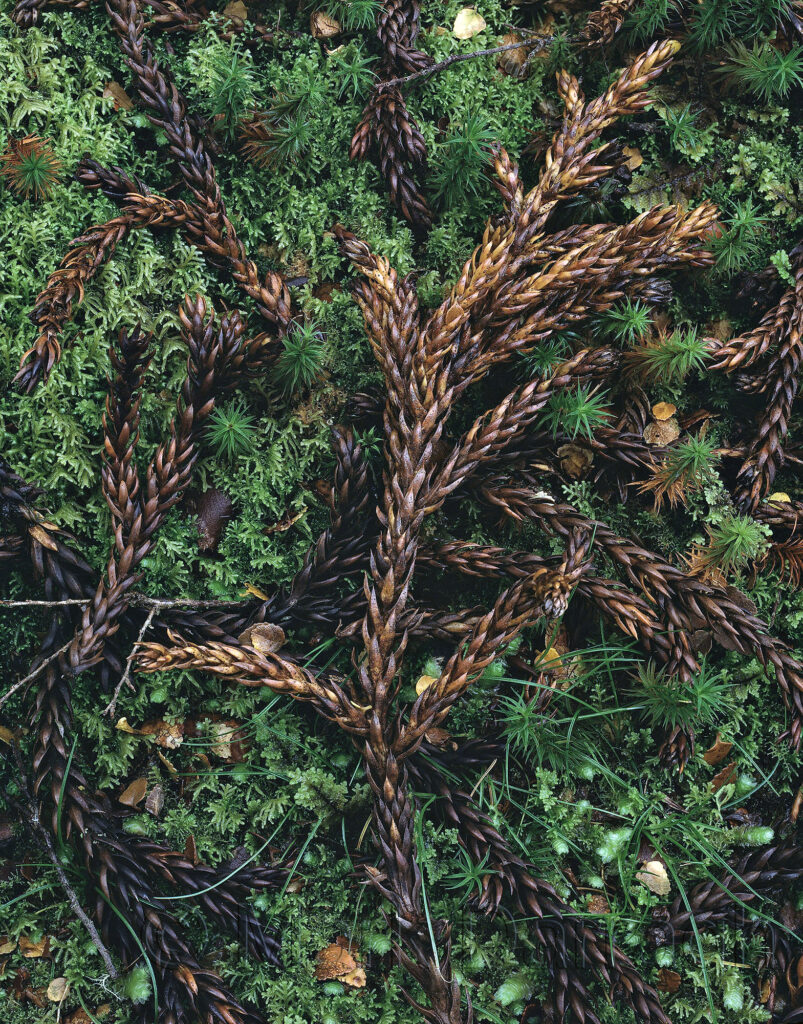
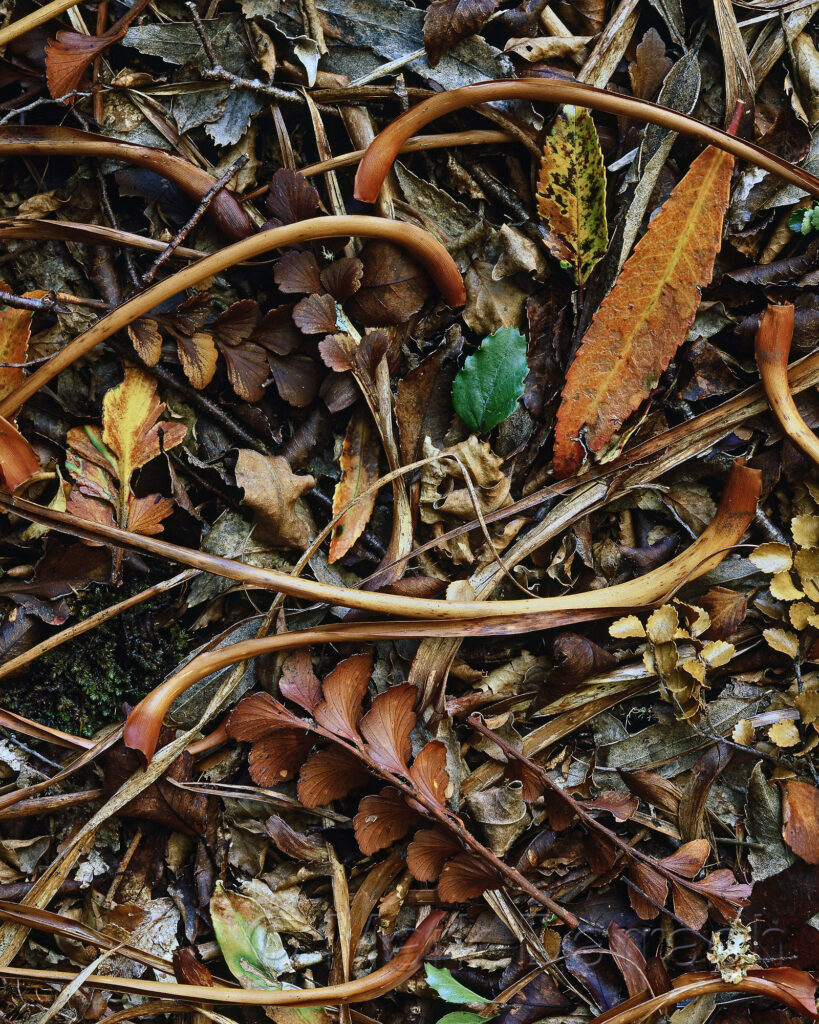
The biodiversity of many of these “micro” habitats can be staggering. In the cool temperate forests of southeastern Australia and New Zealand, it is not unusual for the forest to be dominated by only a few or even just one canopy species and an understorey of perhaps a dozen or more. When one looks at a single boulder or section of the forest floor, you often find dozens of species of mosses, liverworts, and ferns and their allies. A single species of fungi may have a specific relationship with a single species of plant. A scattering of leaves on the forest floor can speak of the species composition of said forest; it also underscores the ecological cycles of decay and breakdown, renewal and growth. In many cases the richest diversity within an ecosystem can literally be at or even under our feet, and the interactions are incredibly complex.
Throughout this article and the preceding one, Abstract Realities, I’ve quoted the words of American photographers Minor White and Eliot Porter; there are several reasons for this. First and most obviously, their ethos regarding photography, as well as their photographs themselves have been an influence on my work. Another reason I’ve quoted particularly from Eliot Porter’s words is his love and respect for the landscape and the subjects that he was photographing, whether it be his early photographs of birds or his later landscapes and details.
Porter’s work was obviously a considerable influence on Peter Dombrovskis, arguably Australia’s greatest wilderness photographer.Even a casual glance through the archive of Dombrovskis’ photographs now held by the national library shows the majority of his body of work are intimate landscapes, close-up studies, and details. Both Porter and Dombrovskis shared a great love of the nature world and were champions of its preservation and conservation. Another thing I feel they share is the beautiful subtlety of their work. Certainly, the work of both photographs is full of dynamism, texture, and form, but all the time the photographer is secondary to the subject.
That ethos continues to influence my work. It’s a lesson in not seeing the world as a series of photographs but rather engaging and immersing oneself in the landscape and learning to look at the natural world more deeply and sympathetically.
“If you could stop the shouting of your own thoughts in your ears, you might be able to hear the small voice of a photograph, a painting, or a pinecone in the sun.” Minor White.
This article serves as a complement to the folio Abstract Realities published here in 2022. Some of the photos I’ve chosen here were taken in the same areas or on the same trips as the ones in the previous folio.
Technical notes
The photographs presented span a period of over 20 years. Looking through my field notes, a variety 4×5 cameras I have used are represented: my first cherry wood 4×5, a Linhof Technikardan and three different metal monorail cameras. At least 5 different lenses were used, ranging in focal length from 120mm to 200mm from four different manufacturers. Only two of the images were made using a true “macro” lens, corrected for close focus. All the images were photographed on transparency film, 5 different emulsions from Fuji and Kodak. In mentioning that, the point I’m making is learning to use the equipment you have available is far more valuable than chasing an “x” model camera or “y” lens. In this age of social media and influencers, many photographers new to the world of large format seem to fixate on particular cameras, lenses, and film. Functional equipment is, of course, important and some is easier to work with than others, but more important is the knowledge to use it and to express your personal vision.
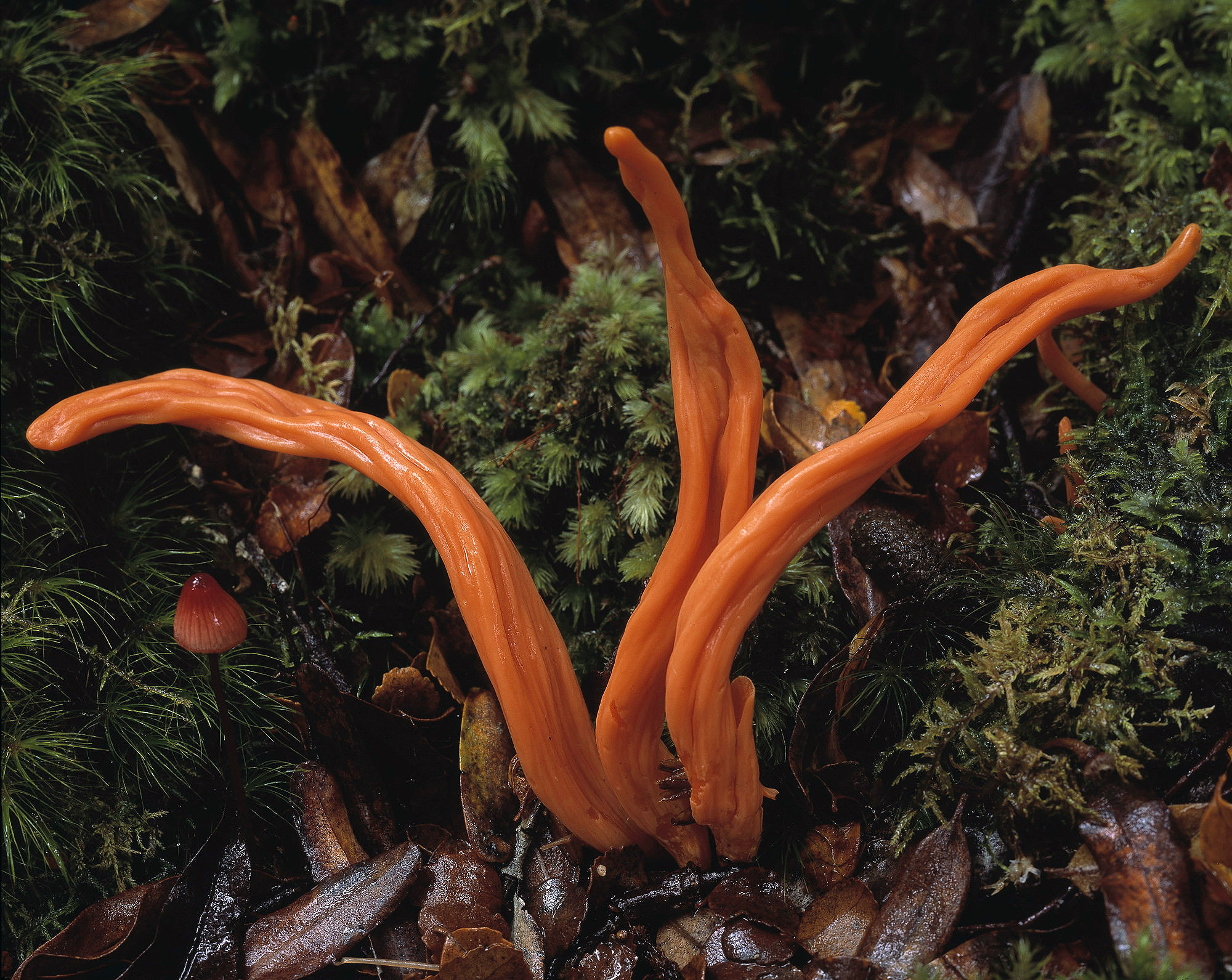
Photograph above: Flame fungus (Clavulinopsis miniata), Takayna/Tarkine rainforest, Tasmania. Scan of 4×5 transparency.