The Photograph Considered number fifty five – Lorraine MacLarty
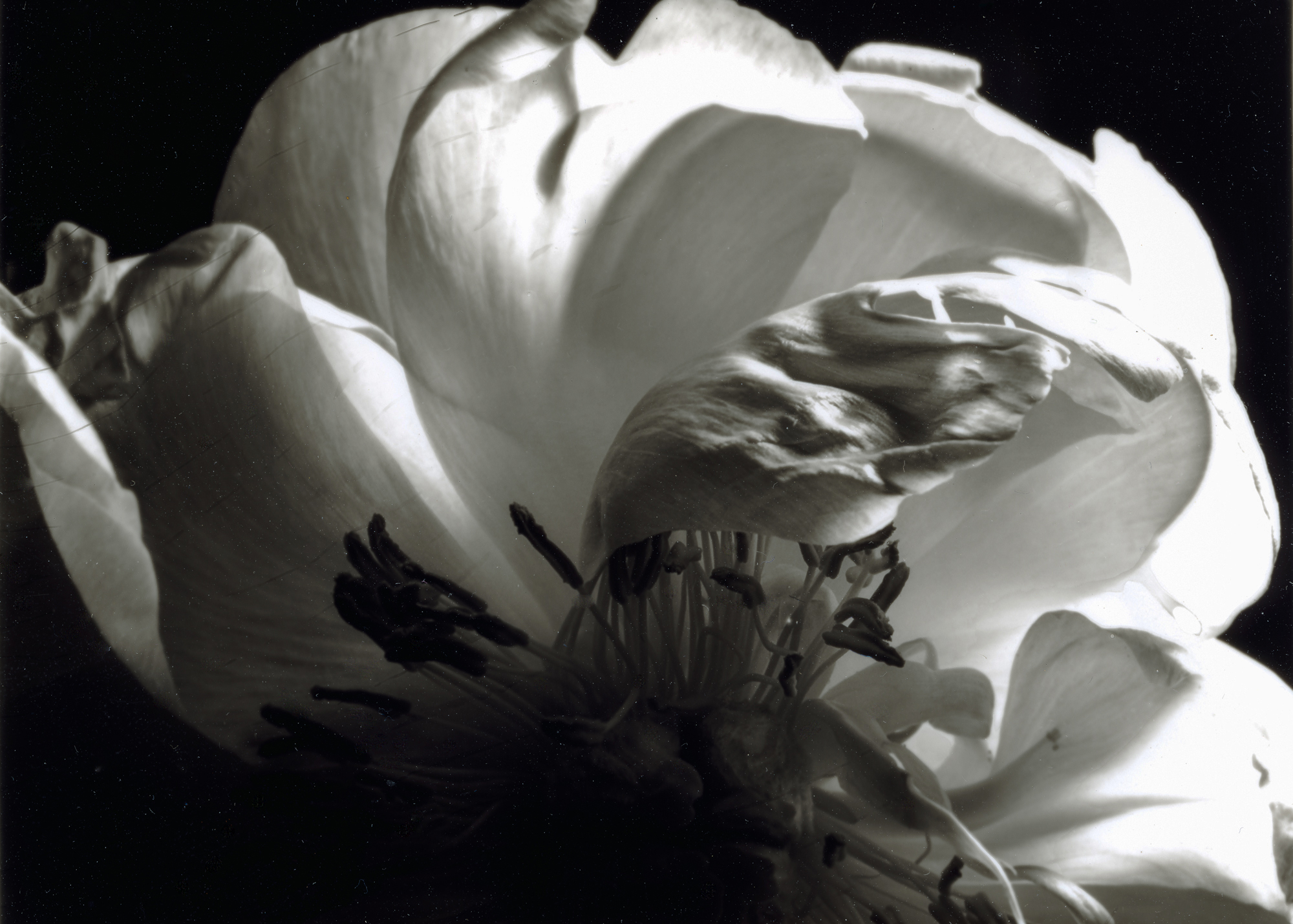
White Peony. 9.6 x 12 cm carbon single transfer print
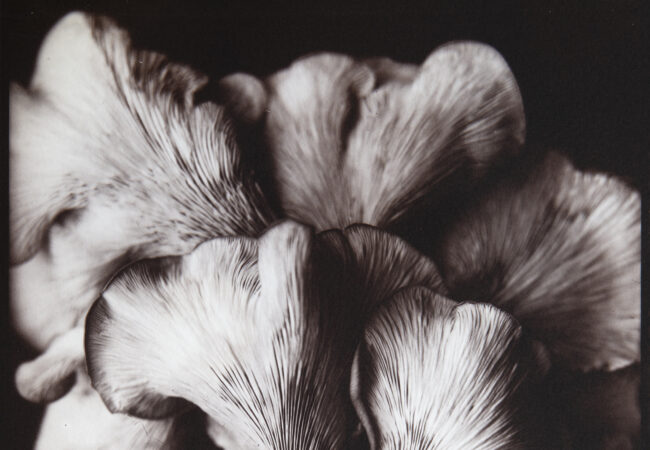
Using flowers as a subject has been an ongoing project of mine for several years. My aim has been to create portraits of flowers, combining traditional representation with macro imagery to reveal their beauty through magnification. This approach has resulted in a series of carbon transfer prints characterized by subtle, textured surfaces. From this series, I have selected a single image for discussion.
Peonies are widely regarded as among the most beautiful flowers and are often referred to as the “Queen of Flowers” because of their lush, dramatic, and romantic appearance. They proved to be an ideal subject.
The photograph was made in the studio using a black backdrop, with the flower placed in a vase. Lighting was provided by two studio lamps: a softbox to create overall soft illumination, and a snoot to supply backlighting.
Once the lighting positions were established, my 4×5 camera was set up on a tripod at a predetermined distance to achieve the desired magnification. All images in this project were made using a 120 mm macro lens.
My film of choice is FP4+, which has a nominal ISO of 125. However, because I intended to print using the carbon transfer process, the film was rated at ISO 160. Combined with extended development, this approach is similar to push processing and results in increased negative contrast.
Although f/22 is often considered the “sweet spot” for most large-format lenses, I chose to work at f/45 to maximize depth of field. Bellows extension was calculated, and the intensity of the studio lamps adjusted to achieve correct exposure at f/45 and 1/125 s, as measured with my exposure meter.
Carbon printing requires a robust negative with an optimal Contrast Index (CI) of 0.65–0.75. This is higher than that required for silver gelatin printing (CI 0.47–0.52) and slightly lower than that typically used for platinum printing (CI 0.68–0.72).
Pyrocat-HD, with its characteristic brown stain, is widely recommended for carbon printing. It appeals to me because I enjoy preparing developers from scratch; it is reliable and, once mixed, has a long shelf life. However, care must be taken when working with these toxic chemicals.
My negative was developed in a daylight developing tank accommodating up to four 4×5 sheets, for 15 minutes at 21 °C. This was preceded by a five-minute pre-wash and followed by a two-minute plain-water stop bath, then standard fixing, washing, and drying. No hypo clearing bath was used.
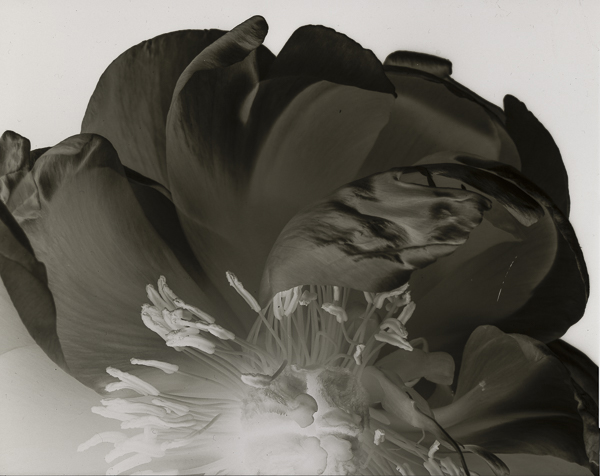
Dating back to the 1860s, carbon transfer printing is a historic photographic process renowned for its exceptional archival permanence. It involves coating a support material, known as a tissue, with a thin layer of pigmented gelatine and then sensitizing it with a light-sensitive chemical. In this project, I used old X-ray film as the tissue support, coated with an even layer of photographic-quality gelatine containing India ink as the pigment. A 3% potassium dichromate solution, which is sensitive to ultraviolet light, was used to sensitize the tissue.
When exposed to ultraviolet (UV) light, the sensitized gelatine hardens. Achieving the correct balance between gelatine thickness, pigment density, sensitizer concentration, and UV exposure is critical. Because carbon printing is a contact-printing process, print size is determined by the negative size, and a carefully exposed negative controls the process’s distinctive long tonal scale.
The amount of UV light penetrating the pigmented gelatine is directly related to the density of the negative. Dense areas of the negative, corresponding to highlights in the final print, restrict light penetration and harden only the upper layers of gelatine. Less dense areas allow more light to pass, hardening the gelatine deeper, closer to the surface of the support.
This print was produced using a contact printing frame and exposed in a UV exposure unit. Although some alternative print practitioners rely on clipped glass placed in sunlight as the UV source, I chose a UV unit for its consistency and precise exposure control, as well as its independence from weather conditions.
The negative was placed emulsion side up on the glass within the contact frame, and the tissue was laid on top with the gelatine side facing down. Once the frame was secured, it was placed in the UV exposure unit and exposed for 19 minutes.
As with all UV-based processes, care was taken to protect skin and eyes from ultraviolet exposure.
After exposure, the tissue was soaked in water and then placed face down onto the final support. This image used Yupo synthetic paper as its final support for its dimensional stability. Pressure was applied with a squeegee or roller to form a sandwich consisting of the tissue, gelatine layer, and final support.
The sandwich was developed in a warm-water bath to transfer the gelatine layer to the final support. During development and subsequent wash baths, the unhardened gelatine was gently removed, revealing the finished carbon print. Because Yupo dries evenly, the print was placed on a flat, level surface to dry.
The three-dimensional texture of the print becomes evident through variations in gelatine thickness across the image: shadows are raised, while highlights remain lower and closer to the paper surface. This physical relief is central to the aesthetic beauty of the carbon print.
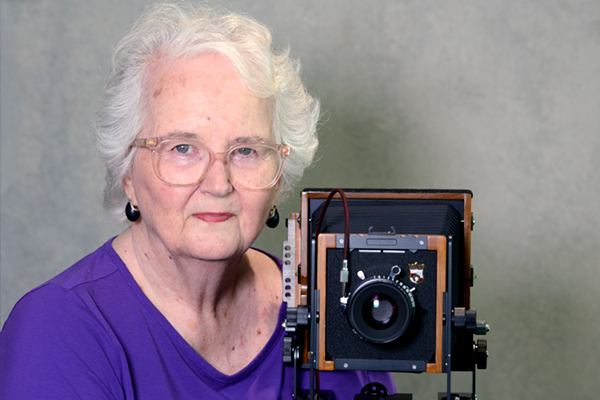
Lorraine MacLarty began working with large-format photography in 2018 after a friend lent her a 4×5 camera. She was immediately drawn to the process, purchased her own camera, and has worked primarily in large format ever since, while continuing to use medium format and digital when appropriate. Alternative photographic processes hold a strong appeal for her. She began teaching herself carbon printing in 2020 during the COVID lockdowns and later expanded her practice to include cyanotypes, salt prints, and albumen printing. She is currently exploring digital negatives to produce larger-scale works. MacLarty maintains a small room dedicated to alternate processes in her home and is based on the Central Coast of New South Wales.