Cape York: Beyond the Tip – Murray White
Somewhere deep in my psyche I must have an affinity for the surveying fraternity. It’s not that I feel compelled to go around hammering timber pegs into the ground, but I’ve certainly gone searching for them. All of the mainland state border junctions, and with the exception of the southern-most tip, all of the other prime compass bearing limits have piqued my curiosity. Even Lamberts Centre – that theoretical point where the entire country will balance on the head of a (very large) pin didn’t escape my scrutiny.
Of course this geographic bucket list was not entirely driven by a latent love of cartography, or even for the travel itself; I visited these places to burn film! What was interesting though, is that in virtually every case, the photograph taken at the precise location itself, was not exposed out of a sense of aesthetic wonder – it was done simply to record the moment. Despite secretly hoping to discover magical subjects in wholesale quantities, all that was typically found was a dog-eared visitor book or a sterile plaque and a few discarded beer cans.
So, having made the case to not visit geographic coincidences for meaningful photographic purposes, let me now explain why I continue to do so. Firstly most of these arbitrary co-ordinates are not exactly easily accessible to the weekend tourist, so some planning and often a lengthy road trip will be required. In addition, an itinerary of sorts could be formulated and research undertaken. These aspects of remote area travel prepare us for that in-depth experience consistent with a project-like undertaking where the ‘destination’ forms just one way point on a more comprehensive expedition.
As an example, we visited Cape York about 18 months ago. The fabled ‘Northern-Most Point On the Australian Mainland’ was certainly part of our agenda, but in the overall scheme of things this visitation was merely a passing novelty. Lining up with others for an obligatory photograph at ‘The Tip’ was in reality quite tedious in comparison with other less frantic locations on the Cape. In fact overwhelmingly the reward, photographically and otherwise, was experienced throughout the entire journey itself, not in this rather farcical tribute to it.
I have in the past exposed plenty of medium format transparency film on the Cape, but this trip was to be B&W only. I brought with me an 8 x 10 view camera, a 4 x 5 view camera and a rollfilm rangefinder camera, together with a backup body for the latter. Previous experience with an otherwise reliable Hasselblad in the Queen Victoria Desert region of South Australia proved to me that the wicked combination of dust, corrugations and heat in this country’s remote regions can play havoc with even the most robust of cameras, (and in that case, picking up a replacement camera body from an outback roadhouse became a lesson in logistical gymnastics!).
In an effort to reduce the risk of gear damage, I pack everything in padded bags and transport them in insulated boxes, built into the vehicle. My film and holders travel in a dedicated insulated box too, and in very hot weather I rotate freezer packs from our fridge to the film box on a daily basis. I do this early in the day just after my morning walk, and at the same time make any notes relevant to the previous 24 hours in respect to destinations and what film was used. I’ve found this routine works for me, and so far any damage to equipment has been accidents in the field rather than disasters in transport.
For those with a desire to visit Cape York there are a number of possibilities open to you. Regular escorted tour buses make the trip with various levels of comfort, duration and flexibility. Tag-a-long 4WD trips are also an option for those hesitant to drive solo, while every Dry Season sees a handful of intrepid souls make the journey on push bikes (although I have to confess this not on my bucket-list for all sorts of reasons….). Self drive options are probably the best choice for dedicated view camera users as we need more flexibility of schedule to accommodate those inevitable moments when all of the photographic stars align.
Potential locations for setting up the tripod are as numerous as the road corrugations that you will become most familiar with (although every year sees just a little more bitumen find its way further north, and on our last trip recent grader work had made travel along most of the Developmental Road a pleasure). There are signposted waterholes and waterfalls, together with plenty of beaches and huge national parks. But beyond the iconic features it is possible, and I think desirable, to find relatively secluded rivers, pockets of rainforest and other interesting tropical subjects.
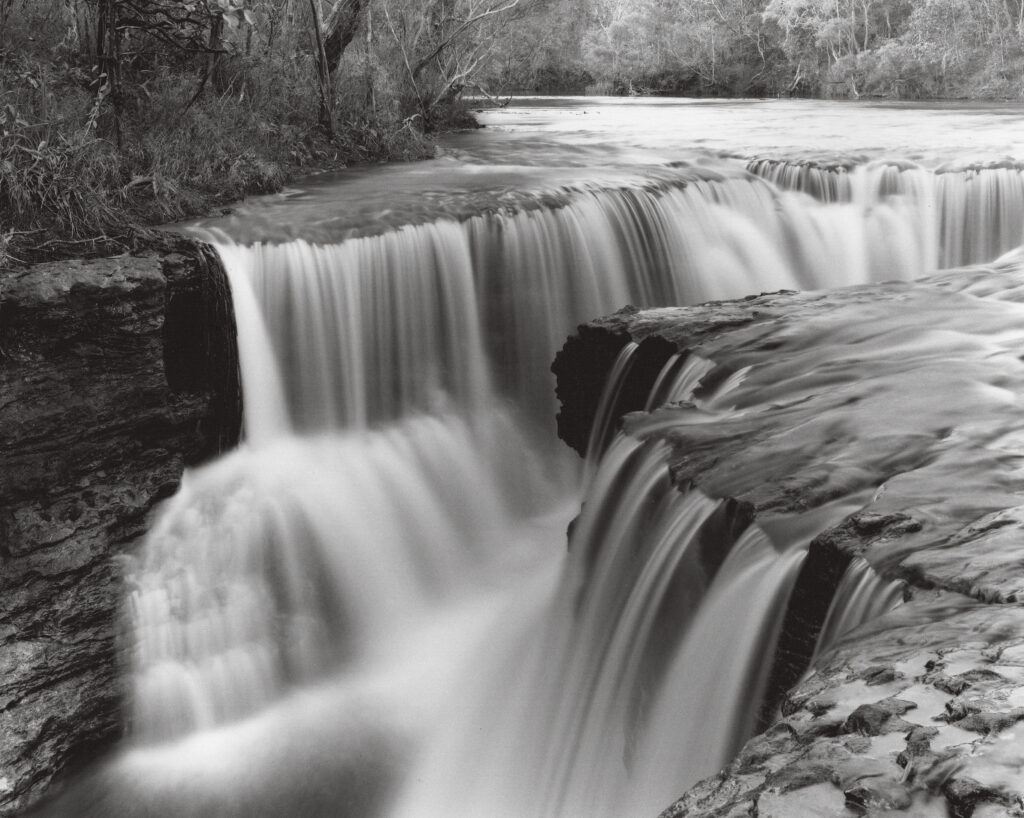
Access to this point of Eliot Falls requires wet feet and probably a shoulder bag for the light meter and dark slides. I looked at various photographic options around this notable feature (and made a couple more 4 x 5s while doing so), but I preferred this shot for its combination of water flows. By the way, the possibilities for colour work across the Cape are outstanding, especially here, as the bronze-coloured river rock is almost metallic in sheen.

Captain Billy Landing is one of the windiest locations on the Cape, with relatively few travellers making their way out here. This subject was found to the north of the camp along a deserted beach walk that occupied the best part of the afternoon. I used the Mamiya 7 with 43mm lens to get a slightly unusual perspective on these overhanging pandanus. There is no shortage of subjects along the coast here, or even in the rainforest patches you will encounter on the way in and out.
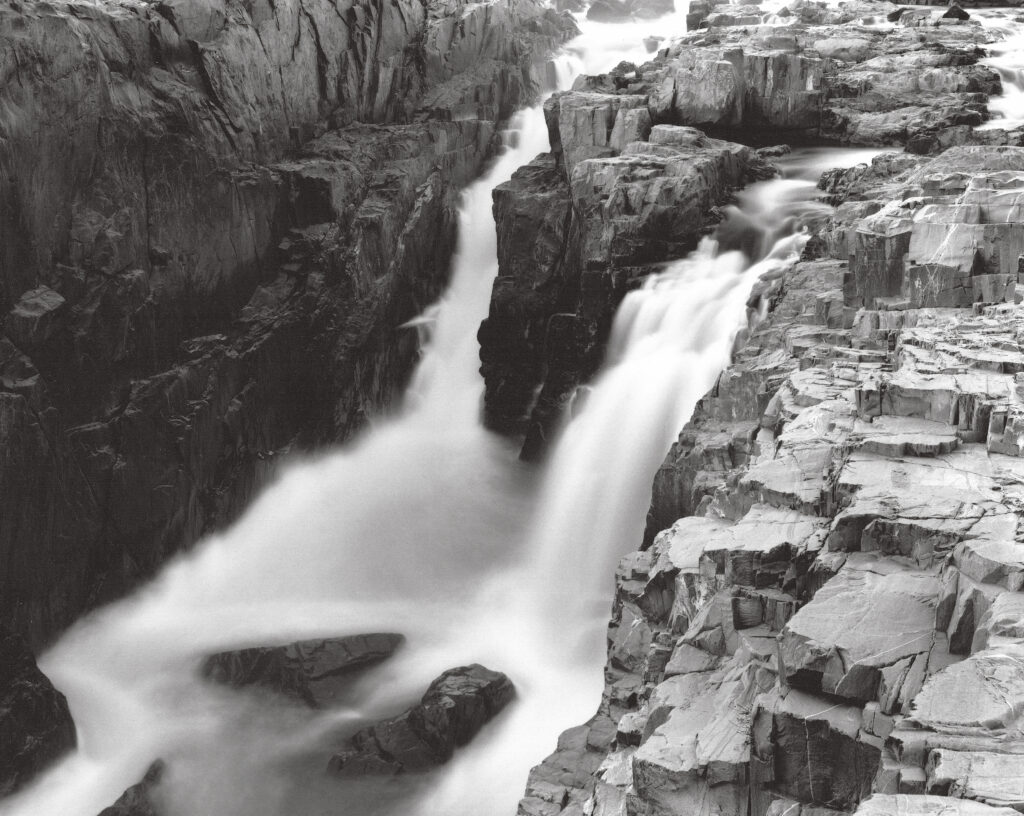
Little Annan Gorge is a great place to set up the view camera, with these falls (here just a Dry Season trickle!) just a short walk from the Mulligan Highway roadside camp. It was a pleasure to frame this shot with diffused lighting and no wind to bother the dark cloth. Like many other features on the Cape, access is a process of following natural features and rock ledges, and there are countless possibilities for subject choice at virtually every step.

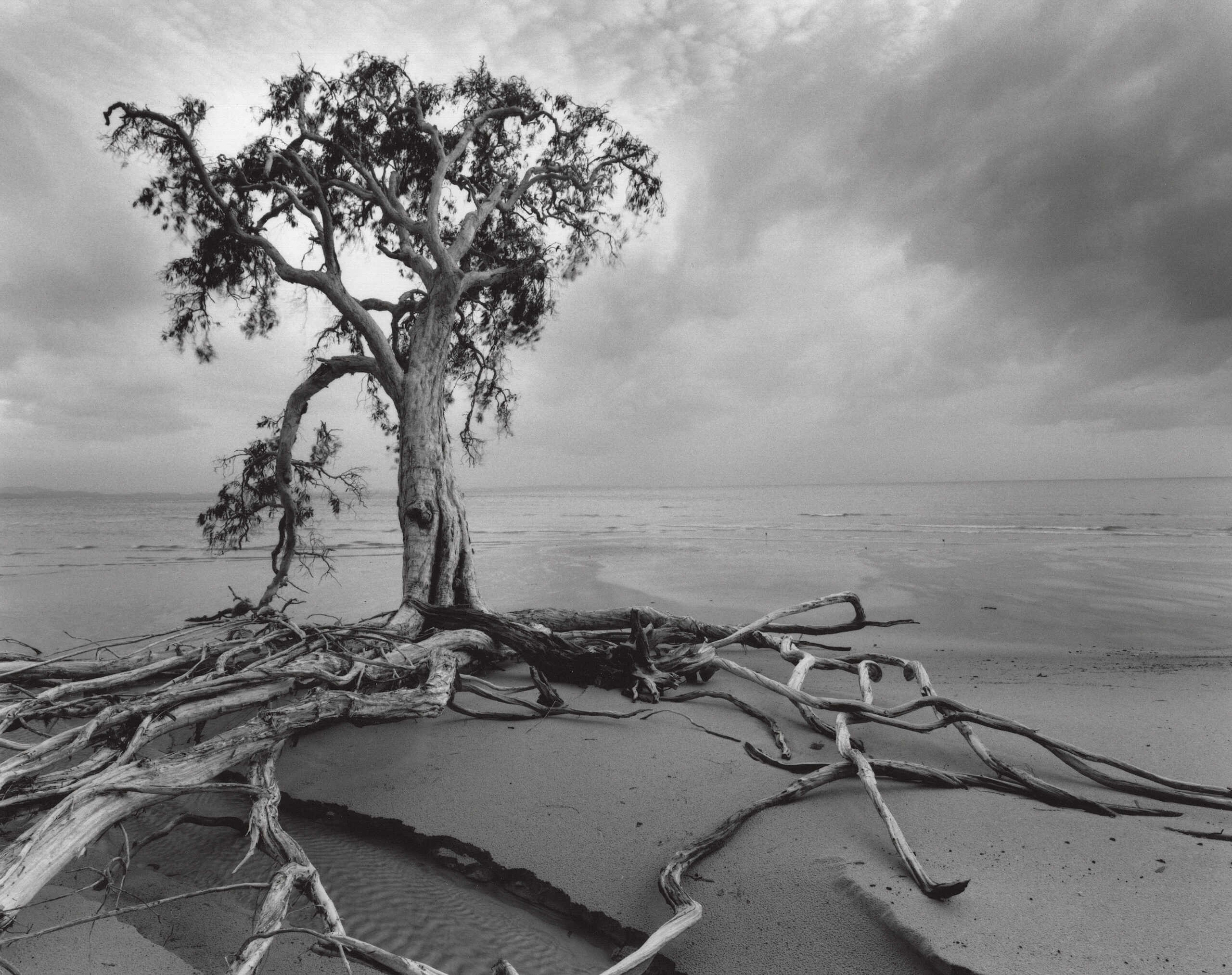
One of the advantages in visiting the Cape’s quieter beaches is that footprints and other signs of human impact are much less obvious. This hand-like tree structure was a pleasure to photograph in its natural form, although I had to be mindful of where I walked, lest I leave footprints of my own to compromise the setting! For this exposure I chose a tight crop in camera to limit other intruding elements, and to allow each branch to physically reach the print border.
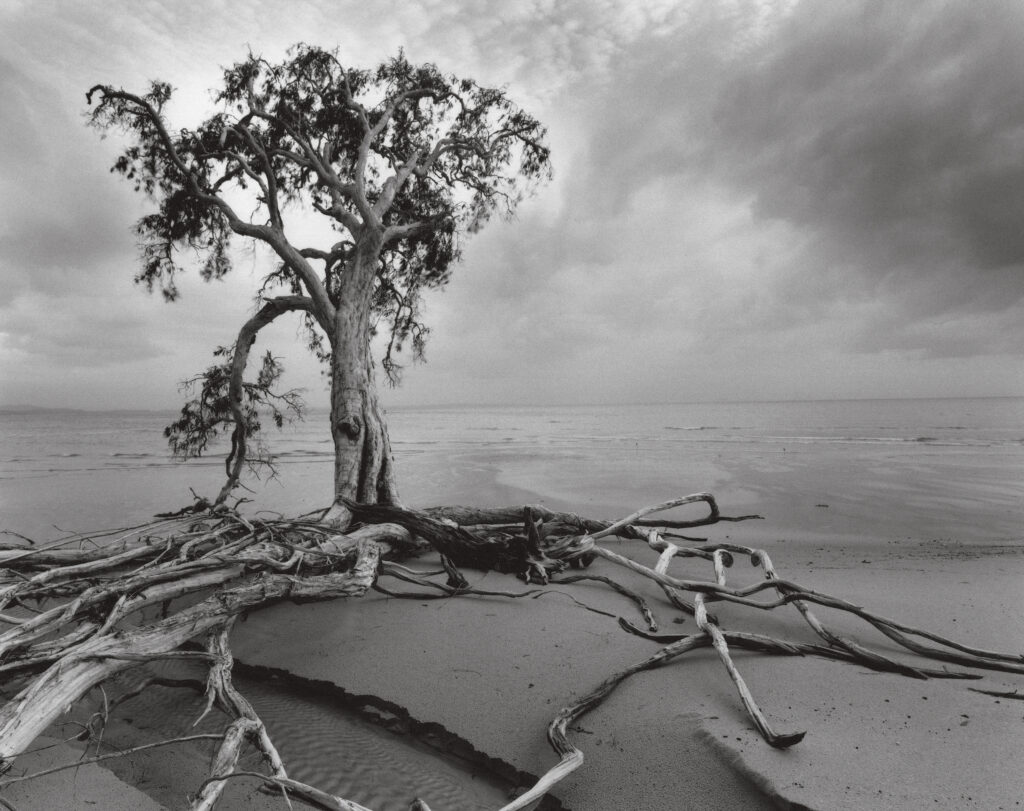
The coloured sands at Elim Beach are a relatively popular attraction but I found this reclusive paperbark along a quieter stretch of coast nearby. With the impact of regular storm surges and the occasional cyclone, its sprawling root system had become a dominant feature of this remarkable existence against the odds. I made the print at grade 1 ½ to control the overall scene contrast, but burnt the sky in at grade 0 to introduce a little tone and texture.
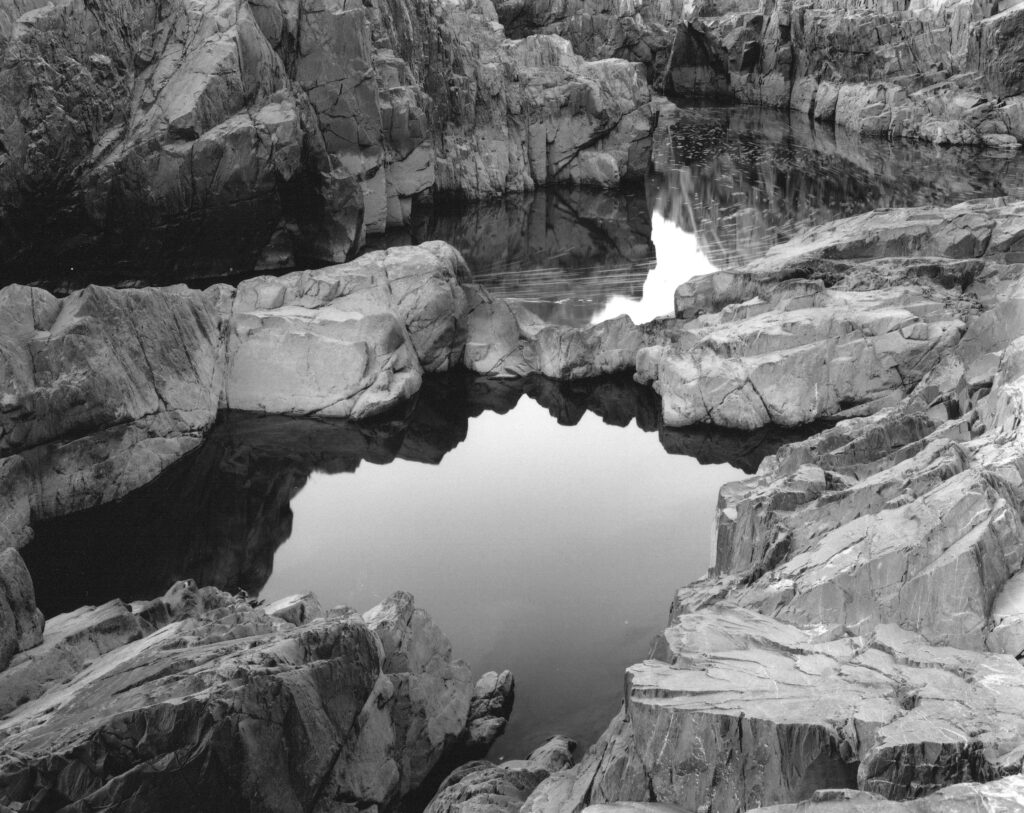
The Annan River is a substantial waterway just south of Cooktown and offers many options for large format photography. There is an easily accessible section of river just behind the Lions Den Hotel (good camping and great atmosphere), together with a number of other points of access further up the waterway. I found this particular section early one morning and racked out the bellows with a short tele lens to pull in this somewhat complex choke section.
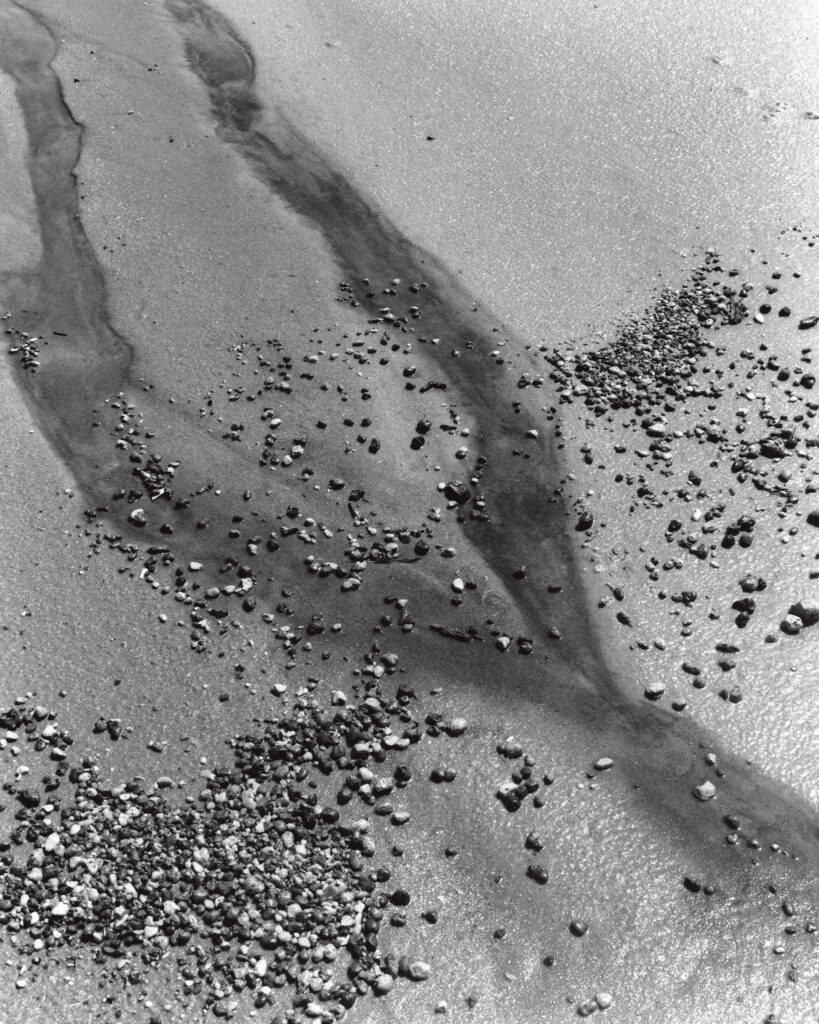
Somerset Beach is much quieter than other beaches frequented by the fishing fraternity north of the Jardine River. We stopped next to a creek under some shady trees, and I wandered off after lunch to see what I could find on the beach. In the direct sun subject choices were a little limited, but I found this combination of tannin stained water and wave tossed pebbles to consider. The Mamiya 7 is not at its best with close subjects (limited depth of field and no tilt), but I rather liked the diagonal architecture of this setting, so I grabbed a shot anyway.
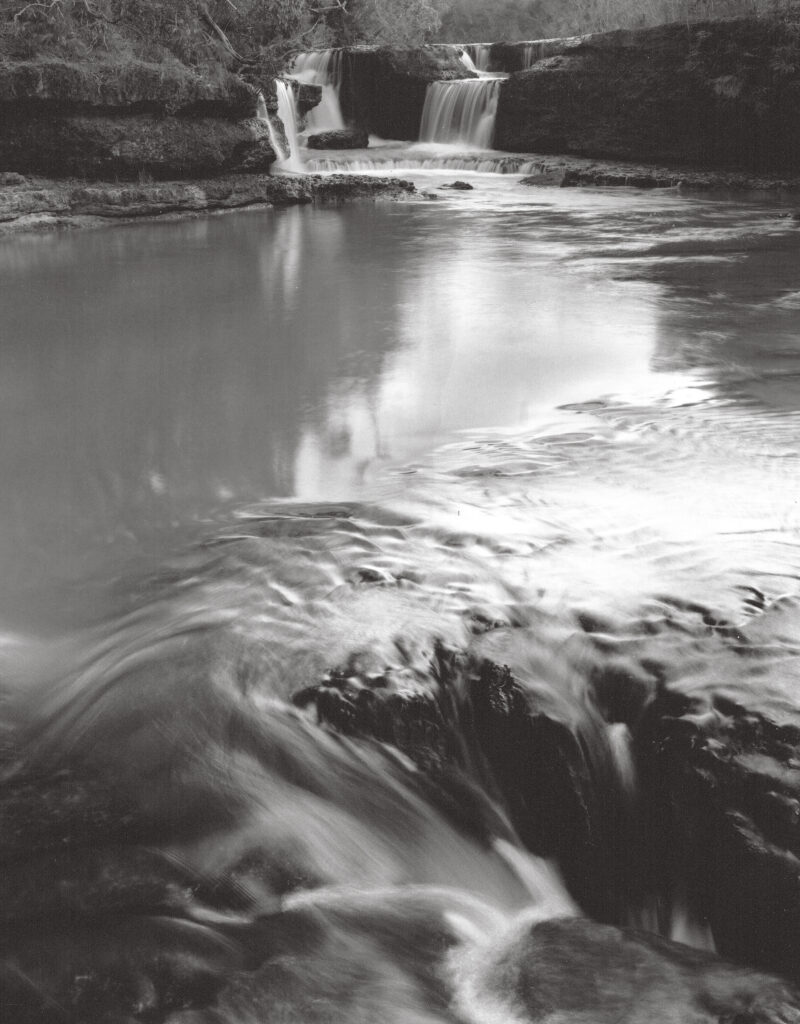
Apparently inaccessible to estuarine crocodiles, Twin Falls is a popular swimming location, with probably one of the busiest camping areas on the Cape. I found daytime photography was virtually impossible with the number of people frolicking around, and the water activity continued well into the evening. I returned early in the morning (my favourite time anyway) and set up the Ebony for this shot. In the darkroom I printed the top half of the negative at grade 0 and the bottom half at grade 2 ½ to equalise the overall scene contrast.



Maybe a retirement gig could be leading a photographic trips up to the tip…as always great image and write up.
Thanks very much Shane. I’m not sure about getting back into the workforce, but I don’t need much arm twisting to head away!
You have a wonderful eye.
That’s very kind of you, thanks Peter. The subjects on Cape York Peninsula are a pleasure to work with!