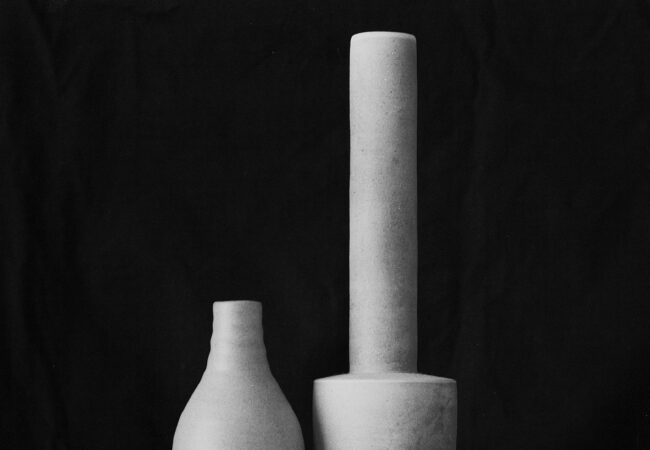
Stumbling upon William’s treasure. Salt print. This image has…
Folio: Julian Pearce
St John’s Cathedral in noble metals
The project
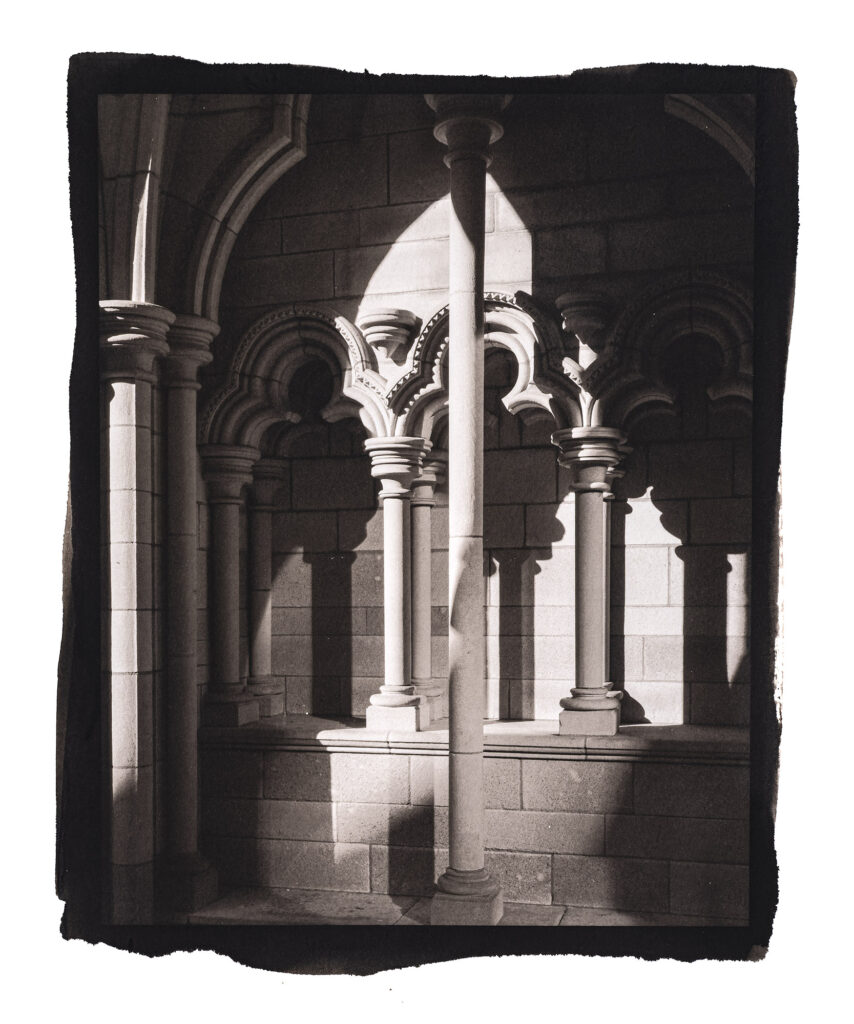
This portfolio presents distinctive views of St John’s Cathedral, Brisbane and was made over eighteen months of repeated visits.
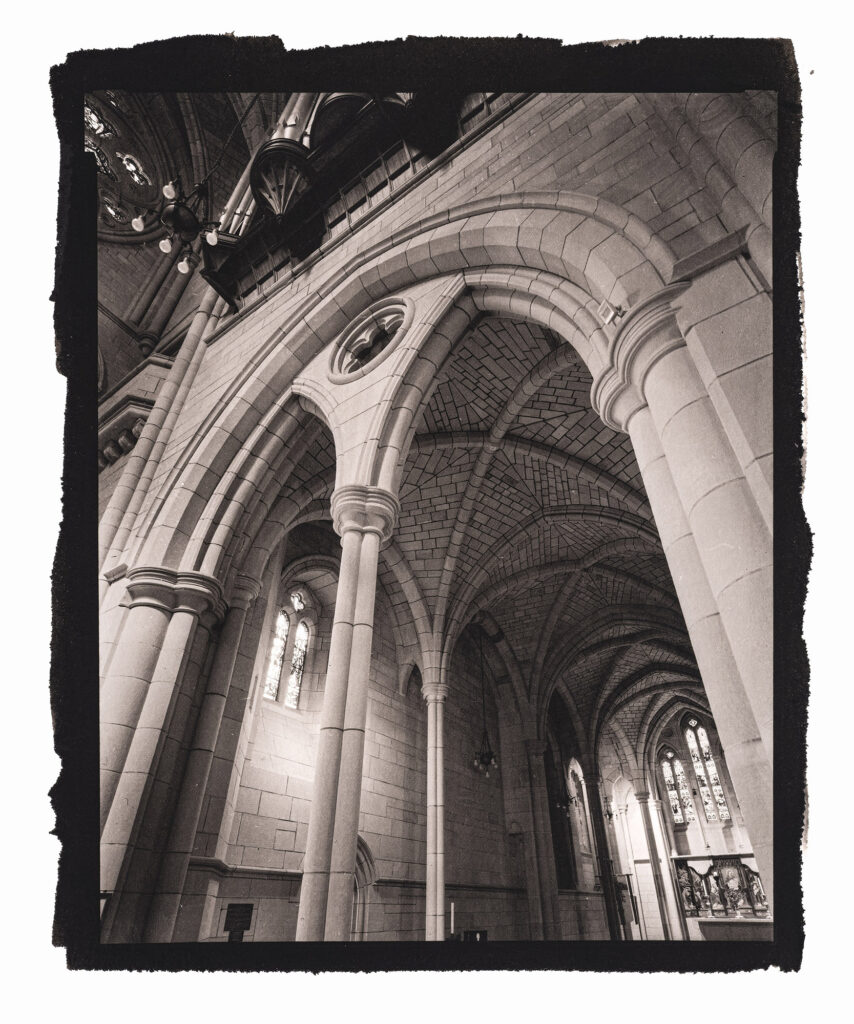
I was initially attracted to the Cathedral because of its wonderful architecture. It was constructed during the 20th century however is based on 13th and 14th century European cathedrals. I became much more familiar with the Cathedral over repeated visits and learnt to be still and observant to better understand the shifting interplay of light and shadow across the day and through the seasons.
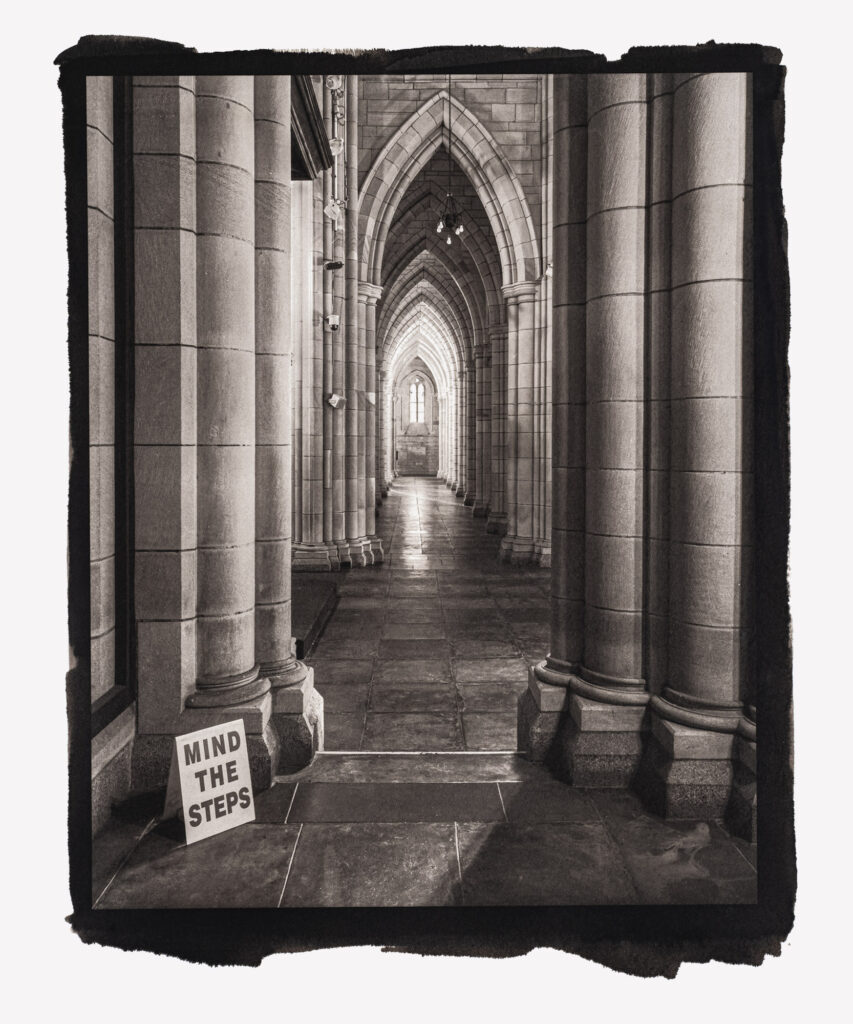
The Cathedral is a place of Christian worship. It is also a spiritual place, and I have sought to reveal a sense of the spiritual throughout the series. Revealing this sense comes from exploring long vistas between rows of columns, sunlight falling through stained glass onto stone columns and floors, and deep contrasting shadows.
The images shown here are a selection from the complete series of nineteen prints which are being exhibited in St John’s Cathedral Brisbane until 22 November 2026. They are also available at Instagram
All nineteen prints are platinum prints. Made with care, the process gives delicate highlights and soft but convincing shadows. Because they use noble metals the prints should last for centuries, as long as the paper itself. The images shown here are photographs of the original prints.
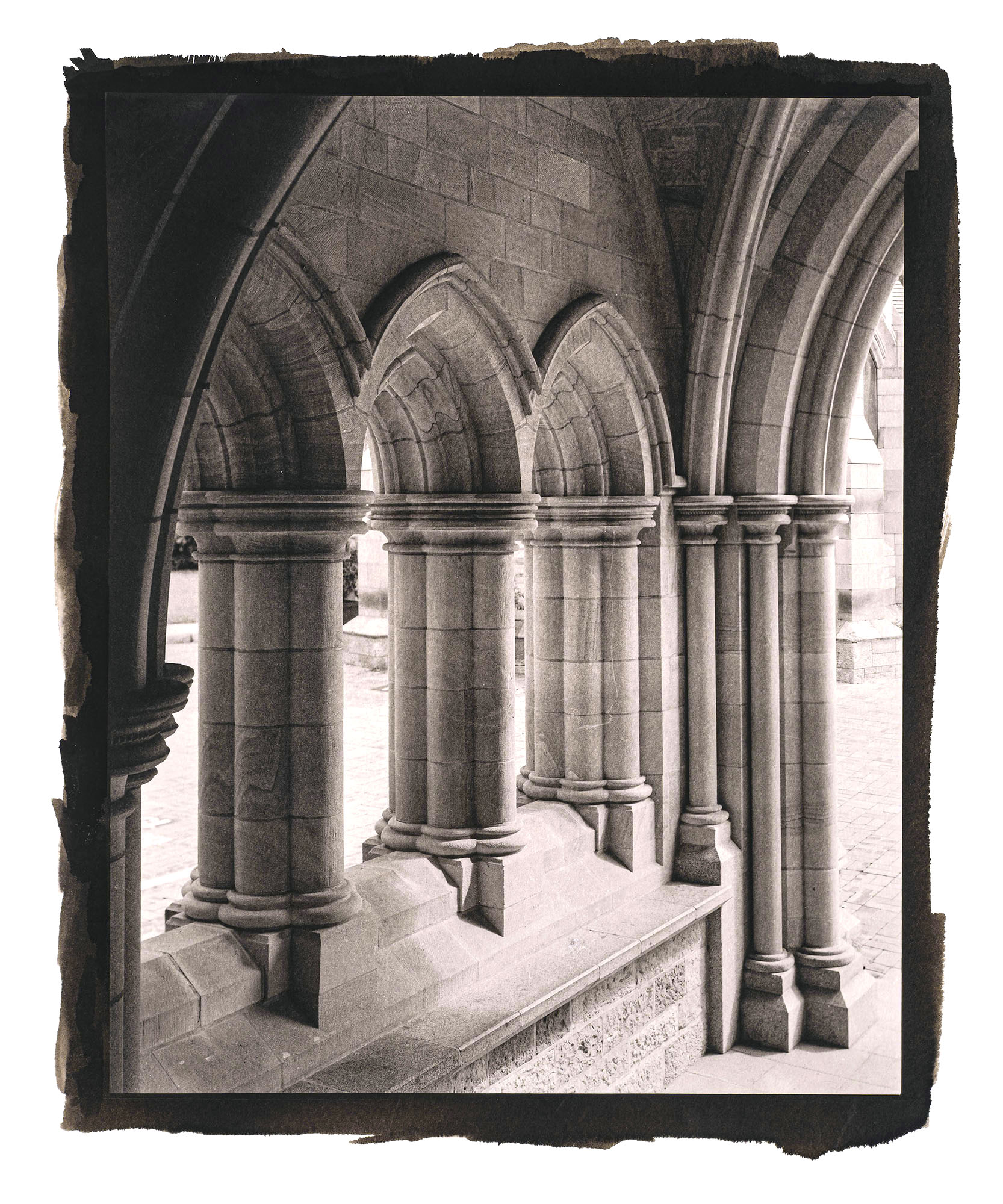
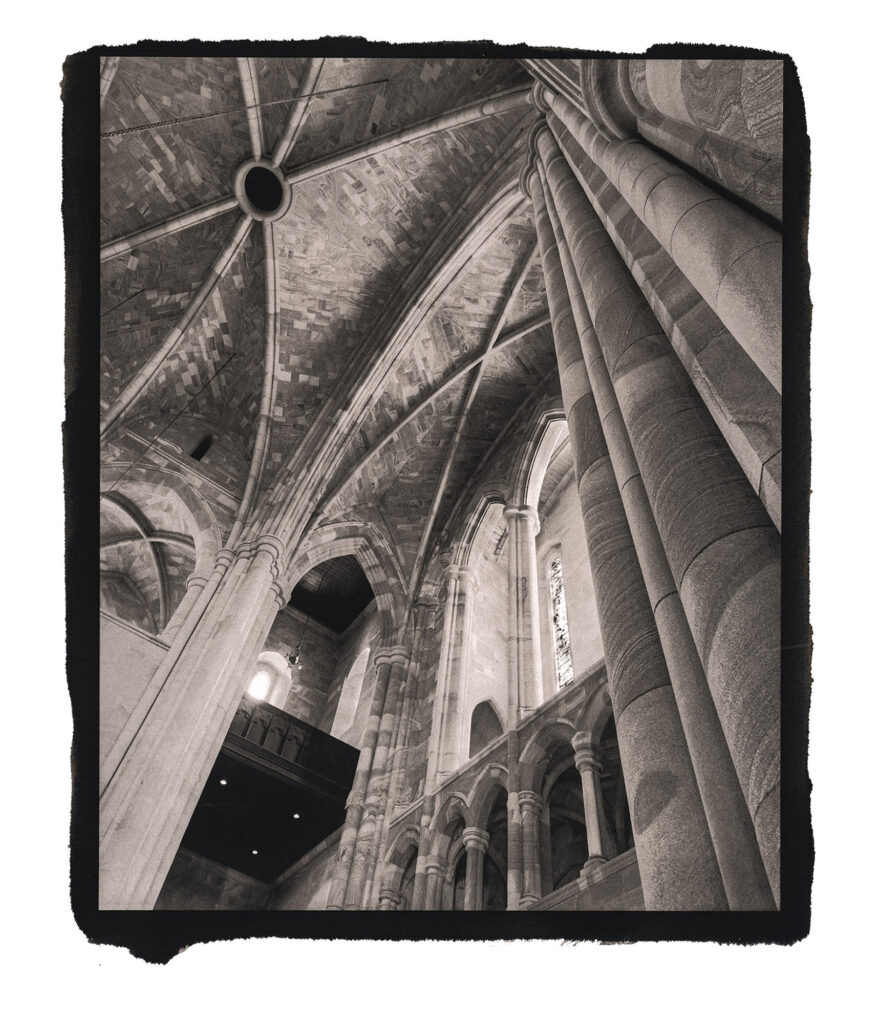
St John’s Cathedral is a neo-Gothic cathedral in Brisbane which was designed in the 1890s and built over the course of eighty years in the 20th century. Its design is based on early 13th and14th century English, French and Spanish cathedrals. The early 13th century English influence is reflected in the shape of the stained-glass windows. The French influence in the style of the stone vaulted ceiling. The semi-circular eastern end of the cathedral, with its graceful free-standing columns, was modelled on the 13th century cathedral in Barcelona.
Photograph above: Southwest porch mid afternoon
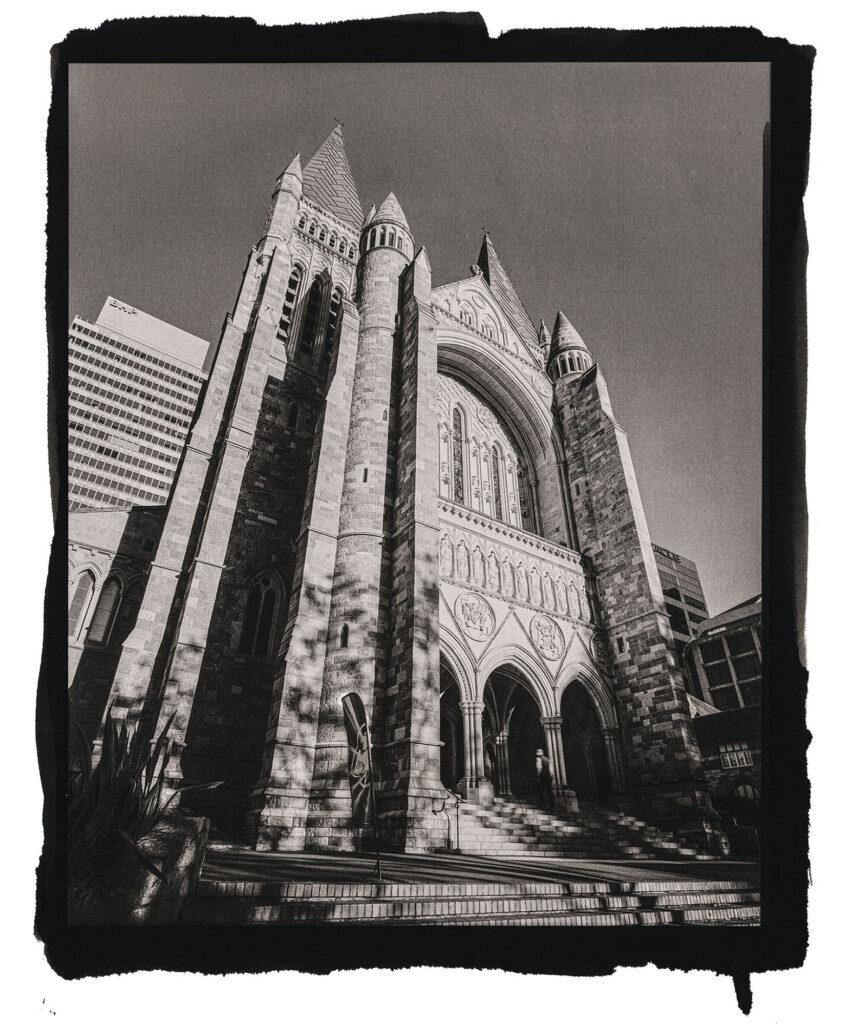
West front of the Cathedral. Late afternoon sun, encroaching shadows, rainbow flag showing the Cathedrals commitment to being inclusive, a person entering.
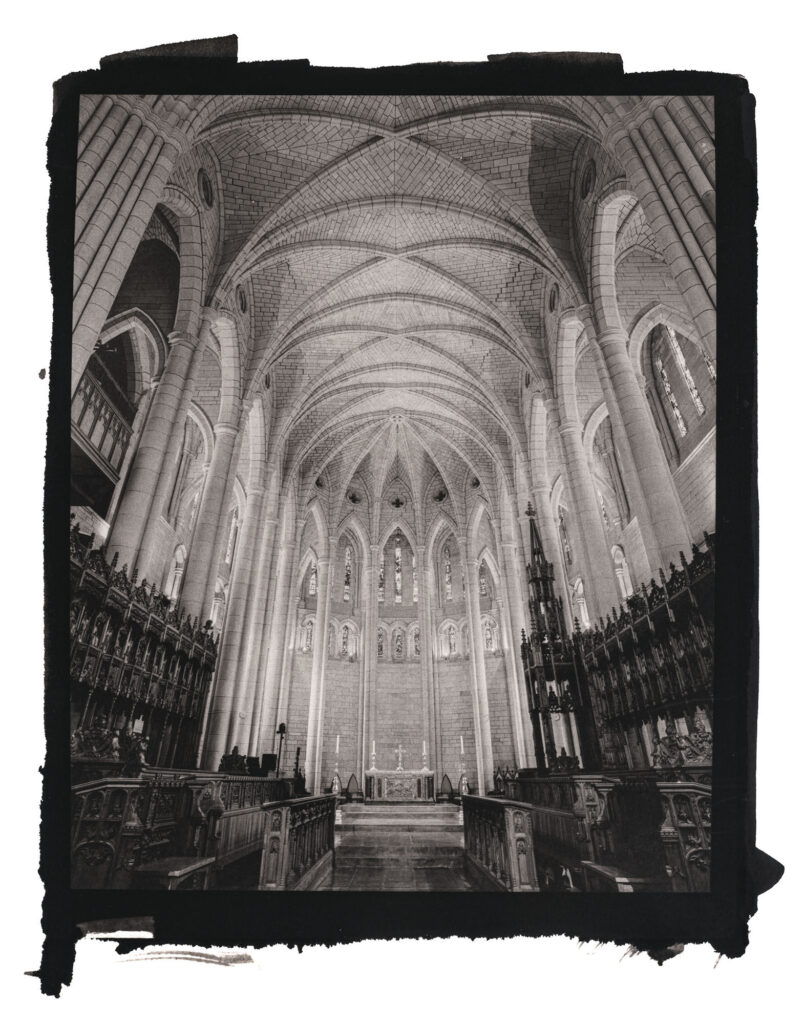
Choir stalls, sanctuary and apse (the semicircular space at the eastern end, modelled on the 13th-century Cathedral of Saint Eulalia in Barcelona)
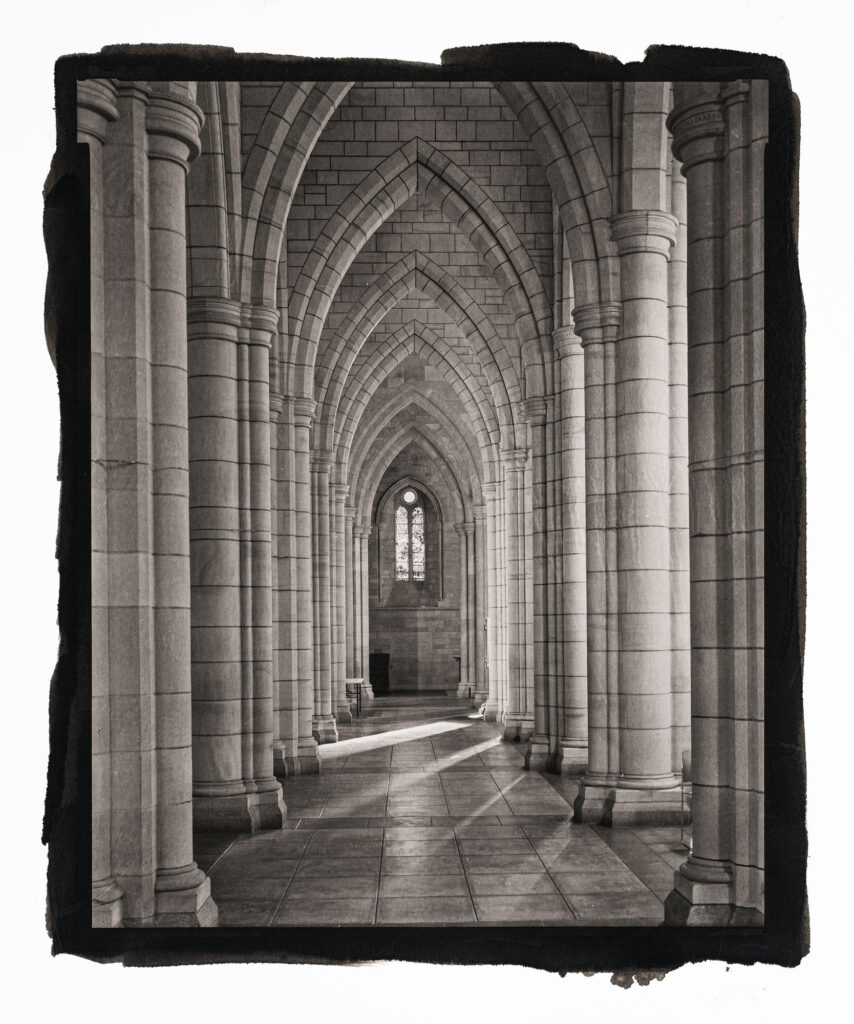
Inner southern aisle. Late morning sun streams through stained glass onto the stone floor.
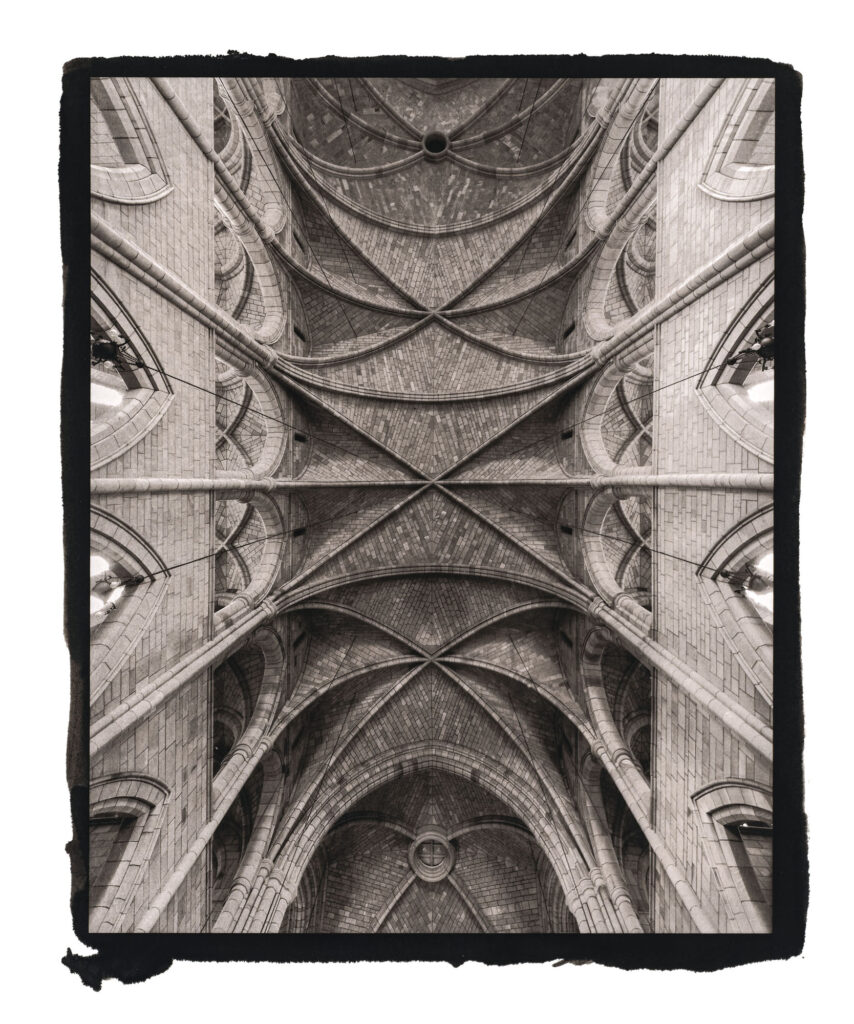
Vaulted ceiling with six ribs, reflecting 13th-century French cathedrals.
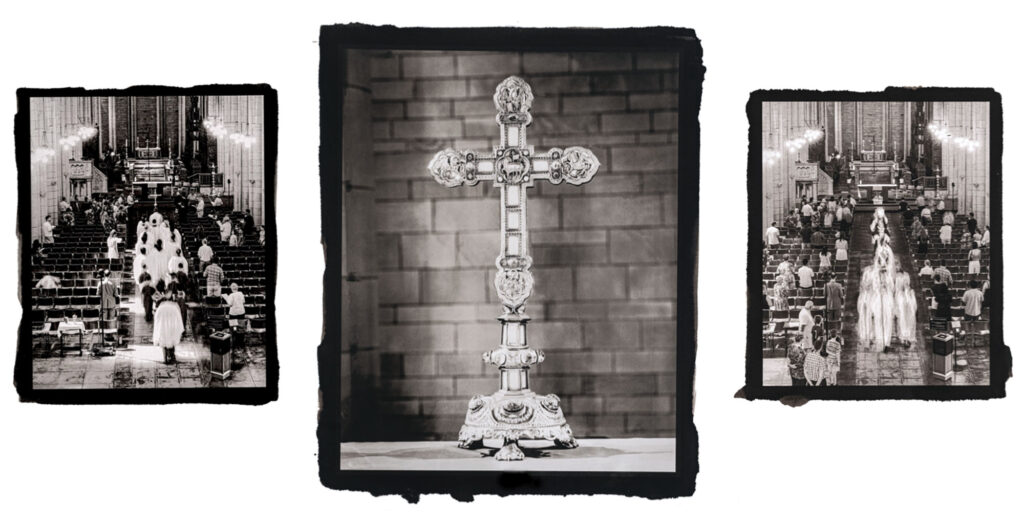
The Cathedral at work during a Choral Eucharist showing the choir entering and leaving. A slow shutter speed deliberately blurs the figures, so the images suggest people in the Cathedral rather than particular people at a particular moment. At the centre of this group is a larger image of the cross, without which the Cathedral would not exist.
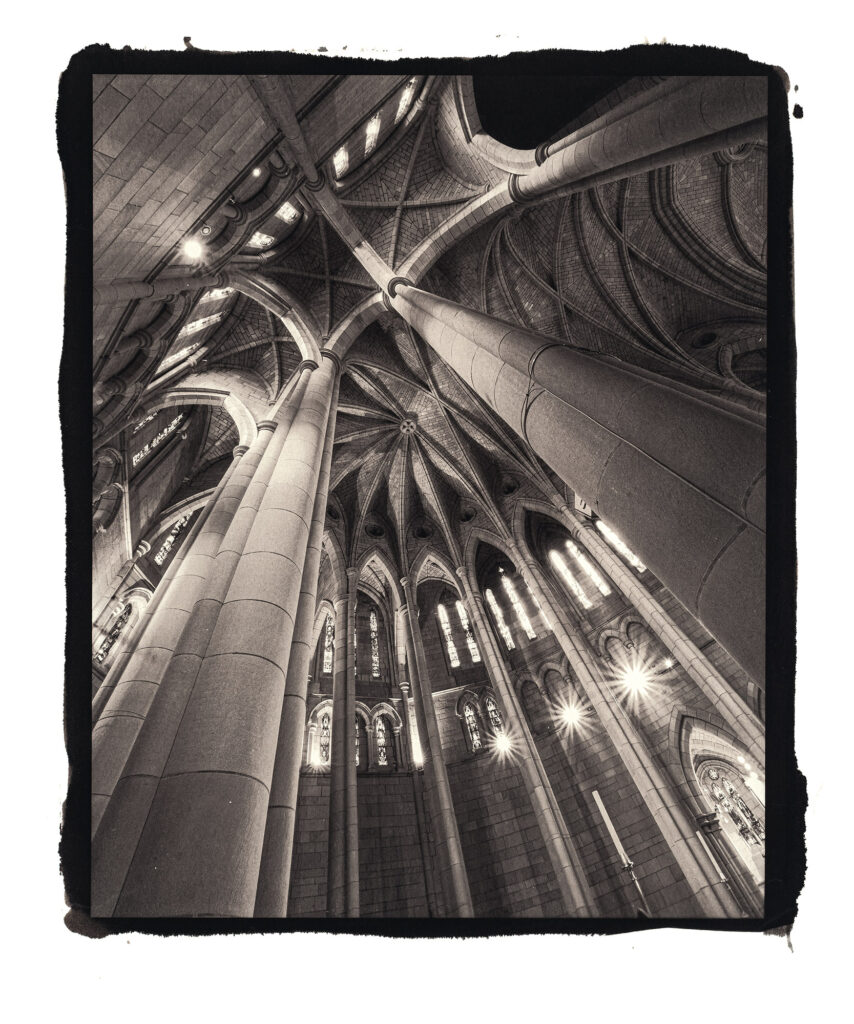
View from the ambulatory (the processional walkway) at the eastern end of the Cathedral
Why black and white rather than colour?
At midday, sunlight pours through the stained glass onto the columns and stone floor. I find myself mesmerised by the colour and lose sight of the structures and forms on which the sunlight falls. In black and white, my eye is drawn to light, shadow and architectural detail. It is the way of exploring a place that I enjoy most.
About the making of the images
Most of the images were made with an 8 x 10 view camera. It is a slow process, with one satisfying image in a day being a successful day.
Large format photography is often called “meditative”. I prefer “contemplative”, because it directs attention to the world in front of you rather than inward.
At times, though, when sunlight is moving quickly across a column or wall, stillness must be abandoned. Every minute counts.
The prints are generally 20 x 25 cm (8 x 10 inches). The cross, because of its central place in the series, is 25 x 35 cm (10 x 14 inches).
To make each print, I brush a solution of palladium and platinum salts onto watercolour paper and expose it to UV light through a negative the same size as the final image. The traditional developing-out method I use has not changed for 150 years.
It is fitting for photographs of a Cathedral that the paper for the prints, Magnani Revere Platinum, was made in a mill near Pescia, Italy, founded in 1404, some fifty years before the first Gutenberg Bible was printed. I was fortunate to acquire a good supply before the original mill closed and production moved elsewhere.
The printing technique and the style of camera were both in common use in the late 19th and early 20th centuries, when the Cathedral was being designed and its construction began.
About the photographer
I enjoy the art and craft of traditional photography: film cameras, analogue printing and the chemistry behind it, all of which sit apart from the computers that dominate so much of our lives. In recent years I have focused on making and teaching platinum printing. The process used for this exhibition is unchanged since it was first developed 150 years ago. The Queensland platinum printers’ group, which meets at Maud Gallery in Brisbane, offered encouragement and helpful feedback in preparing this portfolio.
These photographs are on exhibition until 22 November 2026, in St John’s Cathedral, 405 Ann St, Brisbane. The Cathedral is open 9.30am to 4.30pm daily. It is comfortable walk from the CBD and Central Station. Between 11am and 2 pm weekdays there is metered parking in Ann St. On Sundays, between services, there is usually parking in the cathedral grounds and in Ann St between 12 noon and 3pm.
Next Post: Exhibition: Nightwood – Jane Burton