An Omeo Weekend
At the end of spring and moving into the Australian summer, the expectation is that the vegetation will start to dry, and worsen as we move into the bushfire season. This is especially true of the Victorian high country. It was thus unusual to see fields of verdant pasture.
Omeo is a small town, population around 400 (2021 census), some two hours north of Bairnsdale, and a similar time to Wangaratta over the rather twisty Dinner Plain/Mt Hotham road. There are two pubs in Omeo, and a few coffee shops/bakeries; not much else though in terms of entertainment or food. One of the pubs did have better food. There is good accommodation: the Omeo Motel, the Golden Age Hotel, Snug as a Bug Motel (originally a temperance boarding house and restaurant); some B&Bs, and the caravan park. The current Golden Age is the fifth to be built in Omeo, the first in 1854, and the latest in 1940 as the previous hotel was destroyed in the Black Friday bushfire of 1939. The hotel has something of an Art Deco-ish feel to it.
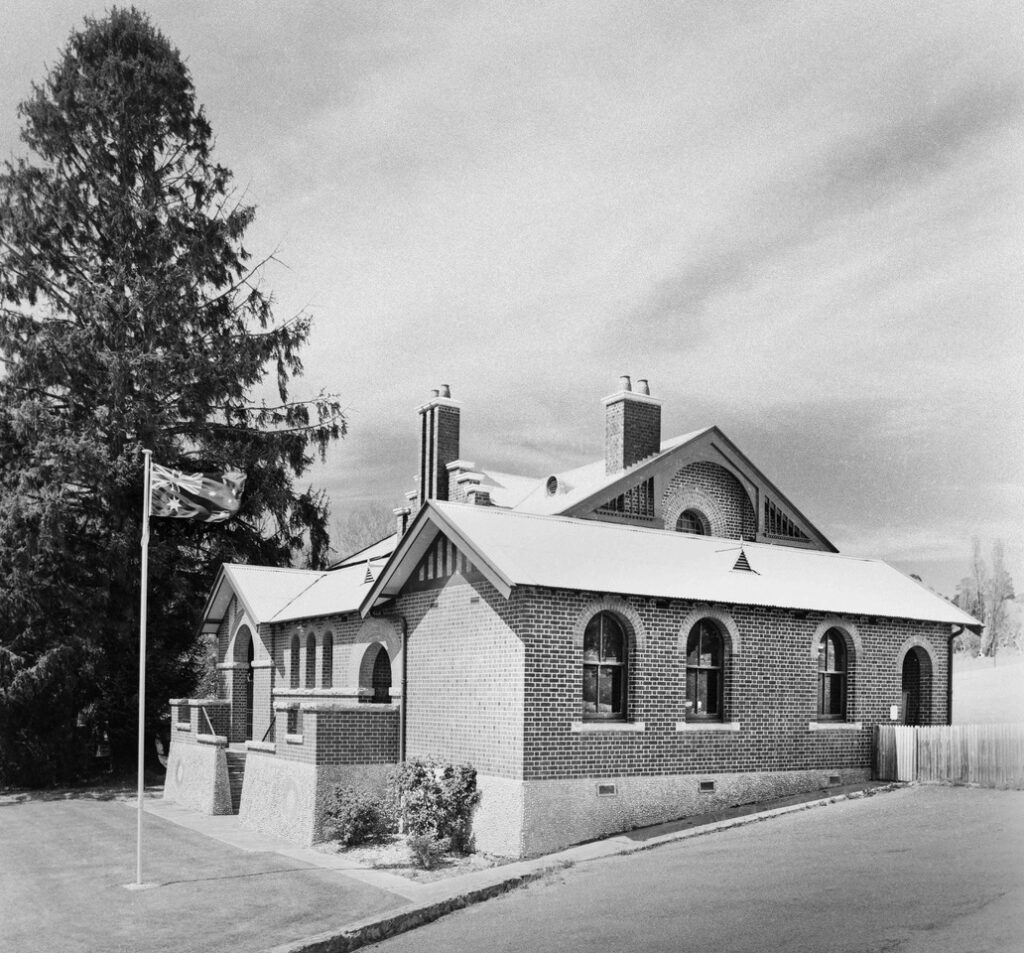
Photographically, there are quite a few places worth photographing. In town, there is the Golden Age Hotel in its “golden” glory; and the Courthouse, where one photographer waited nearly 2 hours for the light to change to where it was wanted:
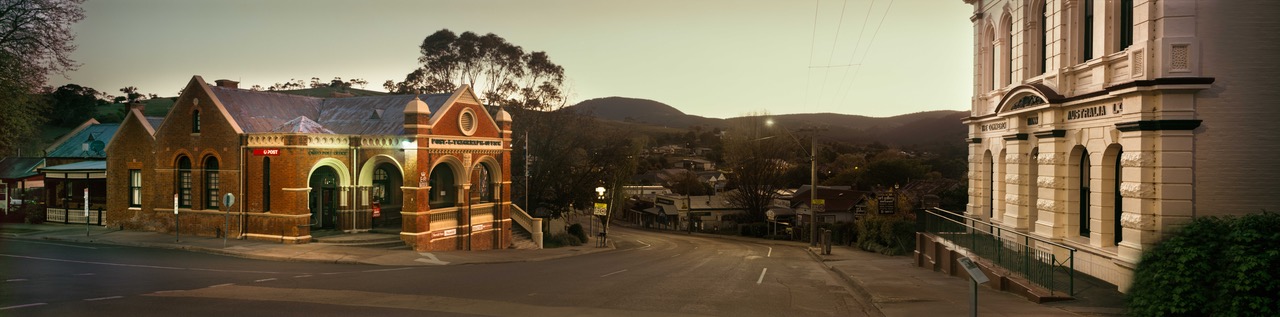
The 6 x 24 cm image of the Omeo main street, the Post Office and Commercial Bank, at the head of the report, has been carefully and quite successfully metered to match the ambient and artificial conditions at twilight, which has resulted in a warm, glowing townscape.
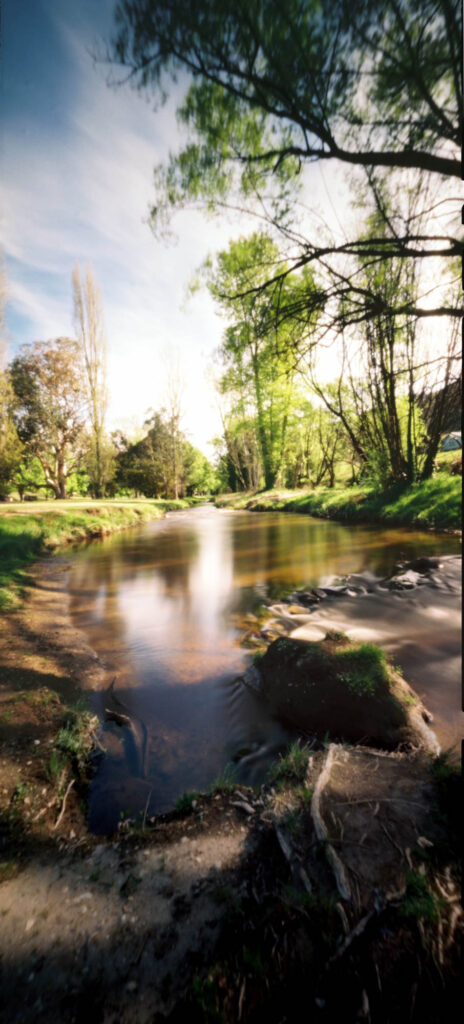
Close by is the Nature reserve, sited on Livingstone Creek, which meanders through the town, and continues for quite a few kilometres.
The Cassilis Memorial Reserve is about 15km from the B500 turnoff near Oriental Claims. In form it has some, not many, memorial plaques, but also several truly beautiful Box trees. These are the real subject on the Reserve.
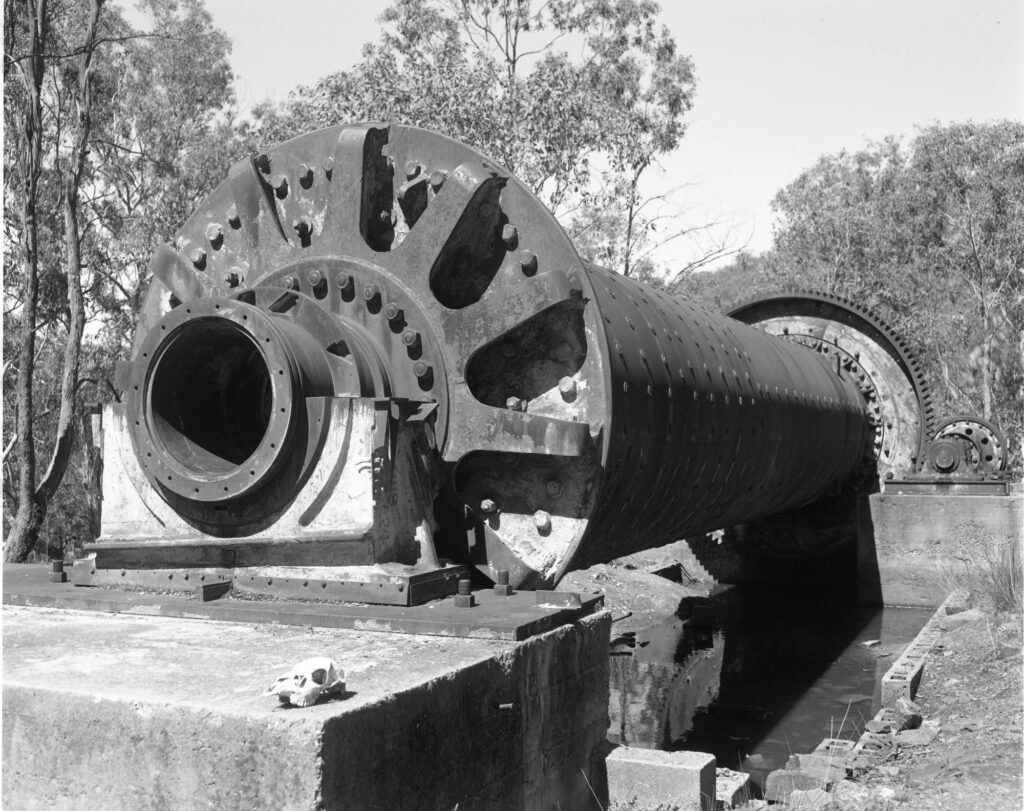
Further down the road to Swift’s Creek are theremains of a gold mining/crushing operation. Alluvial gold mining started in the 1850s, but a significant impetus happened in the 1880s when quartz reefs were discovered. The crushing operation was initially powered by steam engines; but as the availability of firewood diminished, the miners built a hydro-electric power station 25km away on the Cobungra River, fed by a 5km open race carrying water from the Victoria River. By 1909, steam had been replaced by electric motors, and were eventually diesel-powered. Much of the operation was dismantled and removed, or destroyed, in the 1939 bushfires. Access is off the Cassilis-Swift’s Creek road, with maybe a half kilometre of dirt road with a small creek ford crossing.
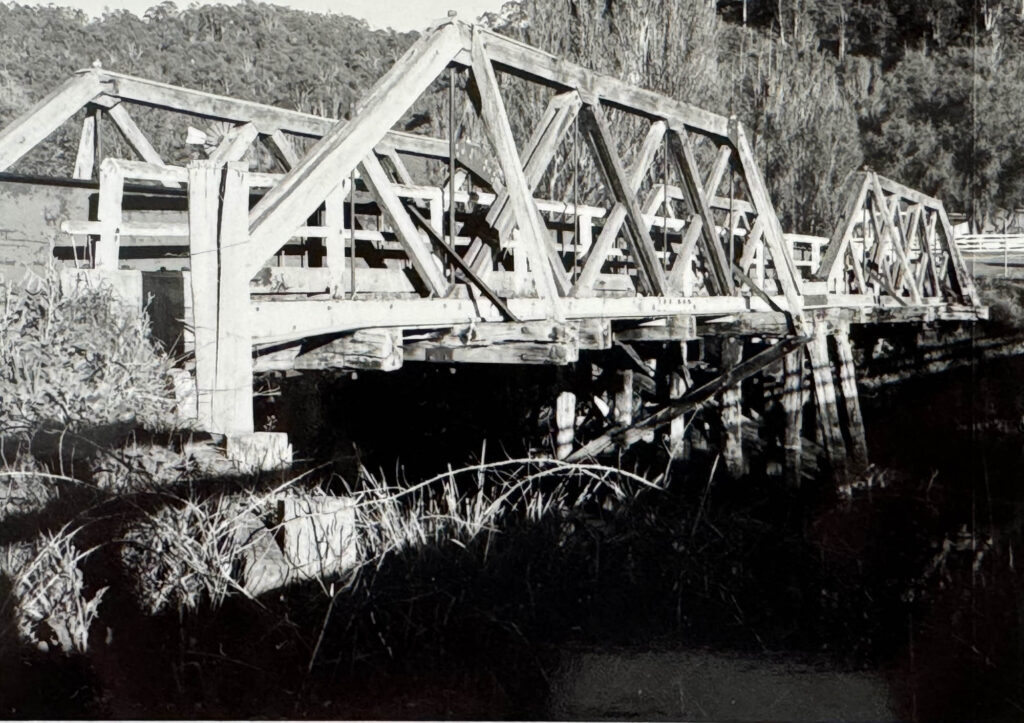
Considered to be both historically and architecturally significant, the Hinnomunjie Bridge spanning the Tambo River is one of the oldest timber truss bridges in Victoria, one of only two with multiple trusses, dating from around 1910. The building of the bridge was a response to a requirement to cover wider river spans. Knocker Track starts nearby, and camping may be available, but is currently recommended for day-use.
The Washington winch, a steam-powered logging skidder, is located on the Lake Hill Track in the forest near Swift’s Creek. It was an 11 by 14 two-speed winch, manufactured in Seattle by the Washington Iron Works company and was one of two machines imported to Western Australia in August 1925. It was initially used to move the large Karri logs. Like the gold mining crushers mentioned above, the winch burnt wood as fuel.
The winches were bought by the Forests Commission after the 1939 Black Friday fires for salvaging timber in the Central Highlands. The machines were able to move large logs up to 800 metres (2,600 ft) by high-lead cables in the wet and steep terrain.
The Winch operated either a high lead or a skyline system. The skyline system involved two large spars (trees) used to create a “flying fox” to lift logs over the rough ground. Riggers climbed 60 metres (200 ft) up trees and headed the trunk, which would cause the tree to sway violently. They then secured the spar with guy cables and attached the tackle.
The Washington Winch, which operated until 1960/61, was used to harvest alpine ash for Ezards mill at Swift’s Creek to make furniture, flooring and architraves.
Further down the Lake Hill Track on the Bentley Plain, Moscow Villa hut can be found; it was initially constructed by Mt Nugong fire spotter Bill Ah Chow in 1941 as summer accommodation.Solidly built, it is in excellent condition.
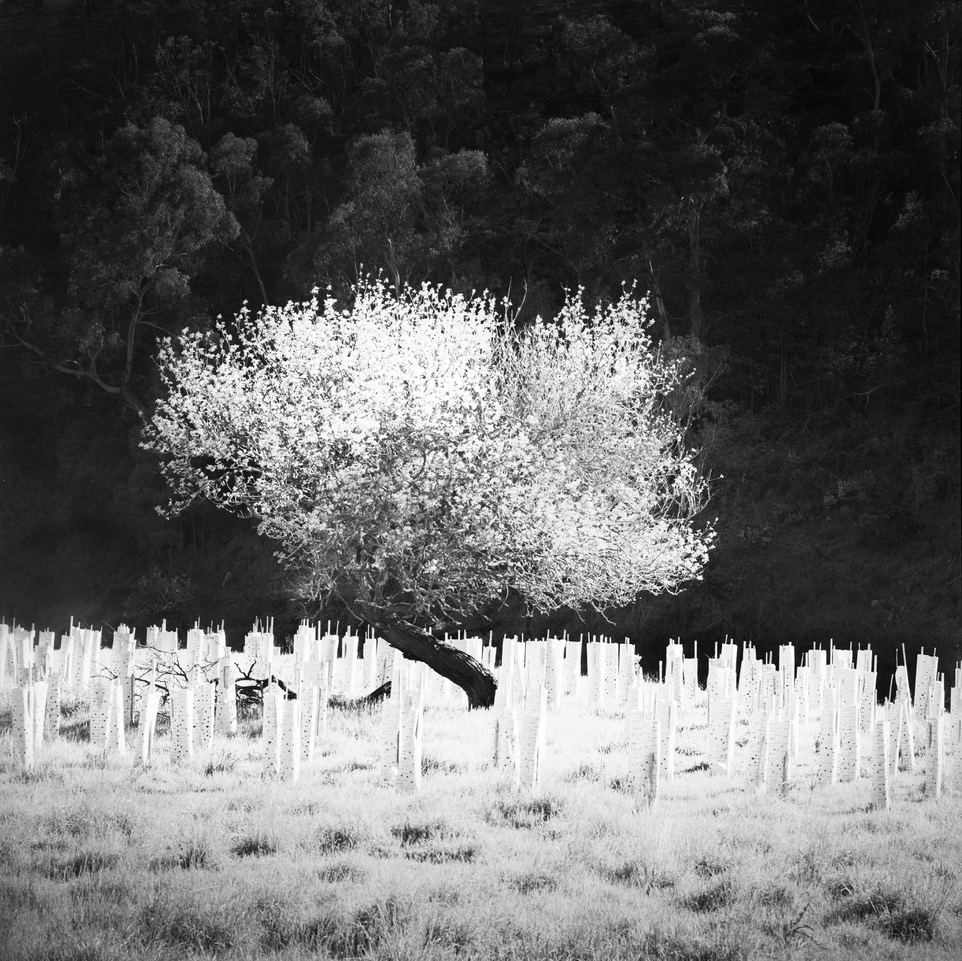
On the way to Angler’s Rest, this image was reminiscent of a teacher surrounded by acolytes, all glowing in the sunlight. The tree was backlit, with the hillside behind it still in shadow, creating a striking effect.
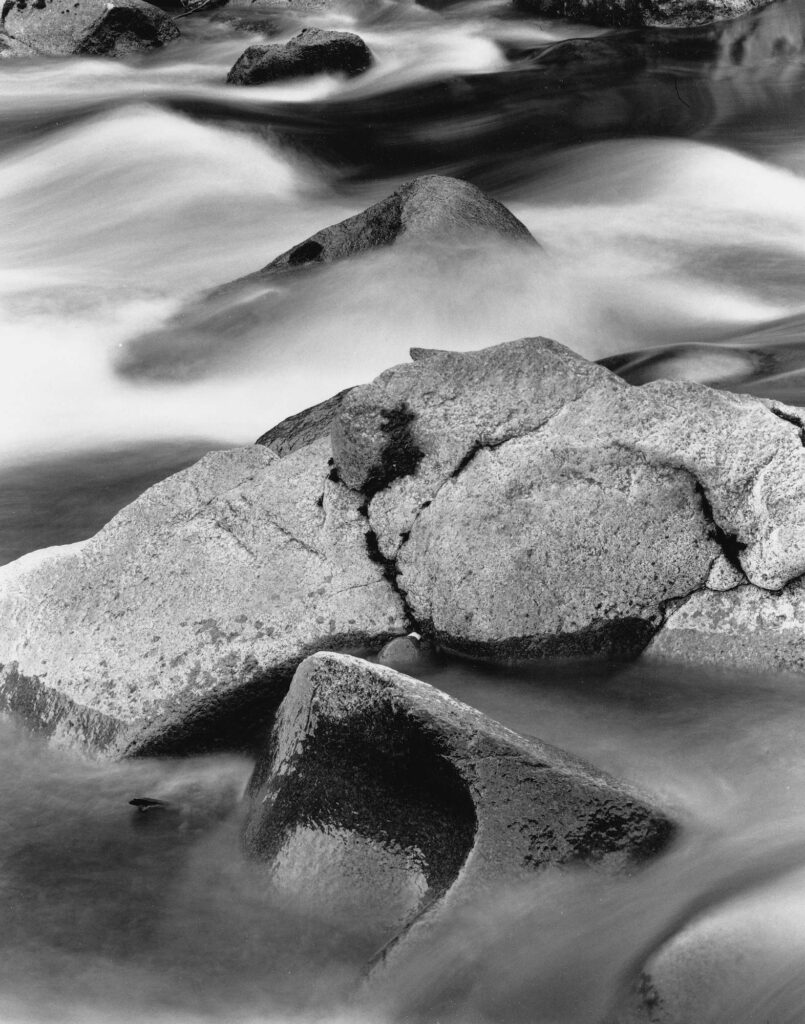
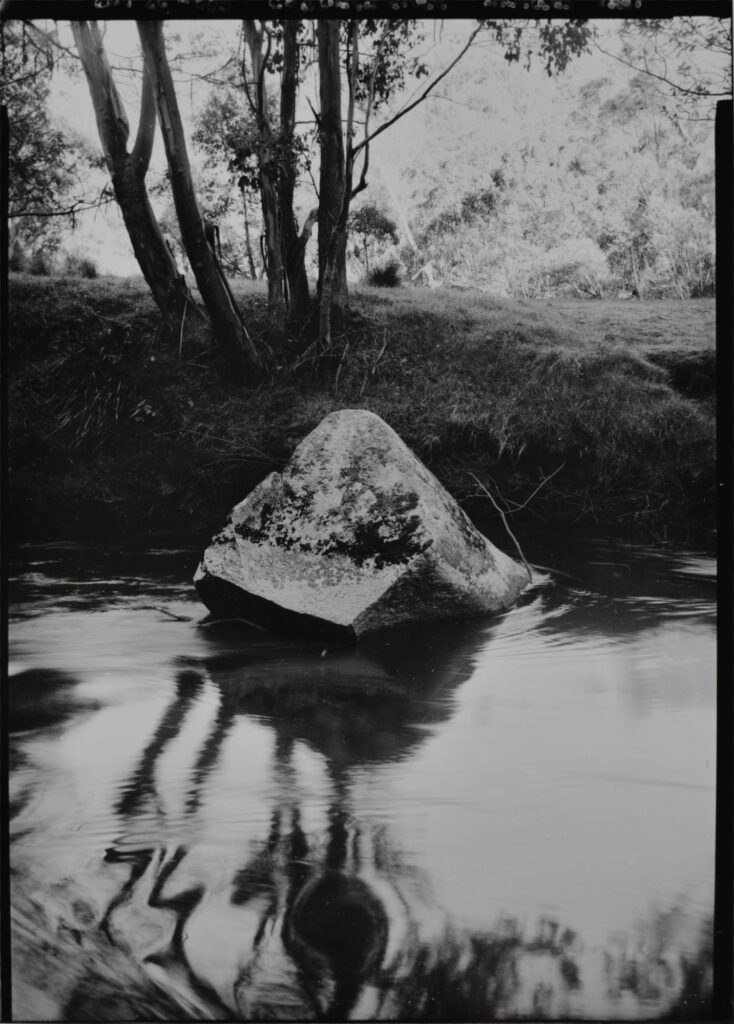
Angler’s Rest is on the Cobungra River, about 28kms north-ish from Omeo. A popular trout fishing river, where the well-known Blue Duck Inn is located. There are a couple of camping areas close by the Inn. The river provides the opportunity for many images, especially semi-abstract studies of the moving current. For example, and another different view of the river:
Altogether, Omeo offers much to photographers prepared to explore its surrounds. While there are largescale images everywhere, perhaps the details of images can be more rewarding.